

What Are Collated Nails? Types of Collated Nails & Paper, Plastic and Wire Guide
On this page19 sections
Take the strain out of nailing when you buy a nailer and collated nails. If you are wondering, “What are collated nails?” read our handy guide, which explains everything you need to know. We start by discussing the various methods of collation, including paper, plastic, and wire methods.
We discuss the different types of collated nails (e.g. brads, ring shank, coil, and headless pins, etc.) If you are thinking, “How do collated nails work?” all is explained in this informative post.
What are collated nails?
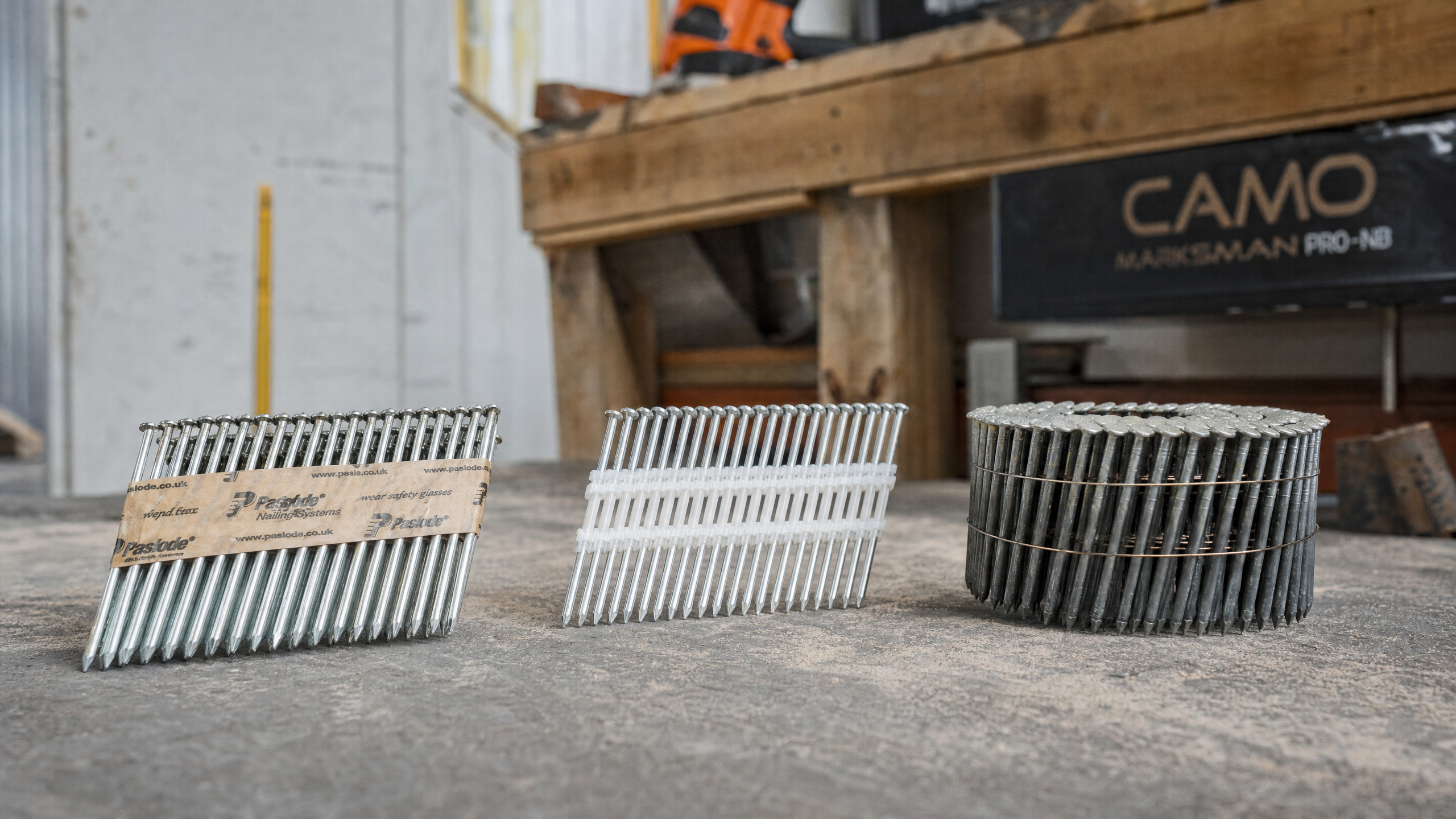
Collated nails are individual fasteners held together in rigid strips or flexible coils using paper, plastic, or fine wire. Designed for automated firing, these fasteners load directly into a nailer to speed up high-volume first fix framing and structural timber work.
To understand how collated nails work, the tool driver blade strikes the lead fastener, shearing it away from the holding strip. This mechanism feeds the next nail into position instantly, helping eliminate manual reloading delays on the job site.
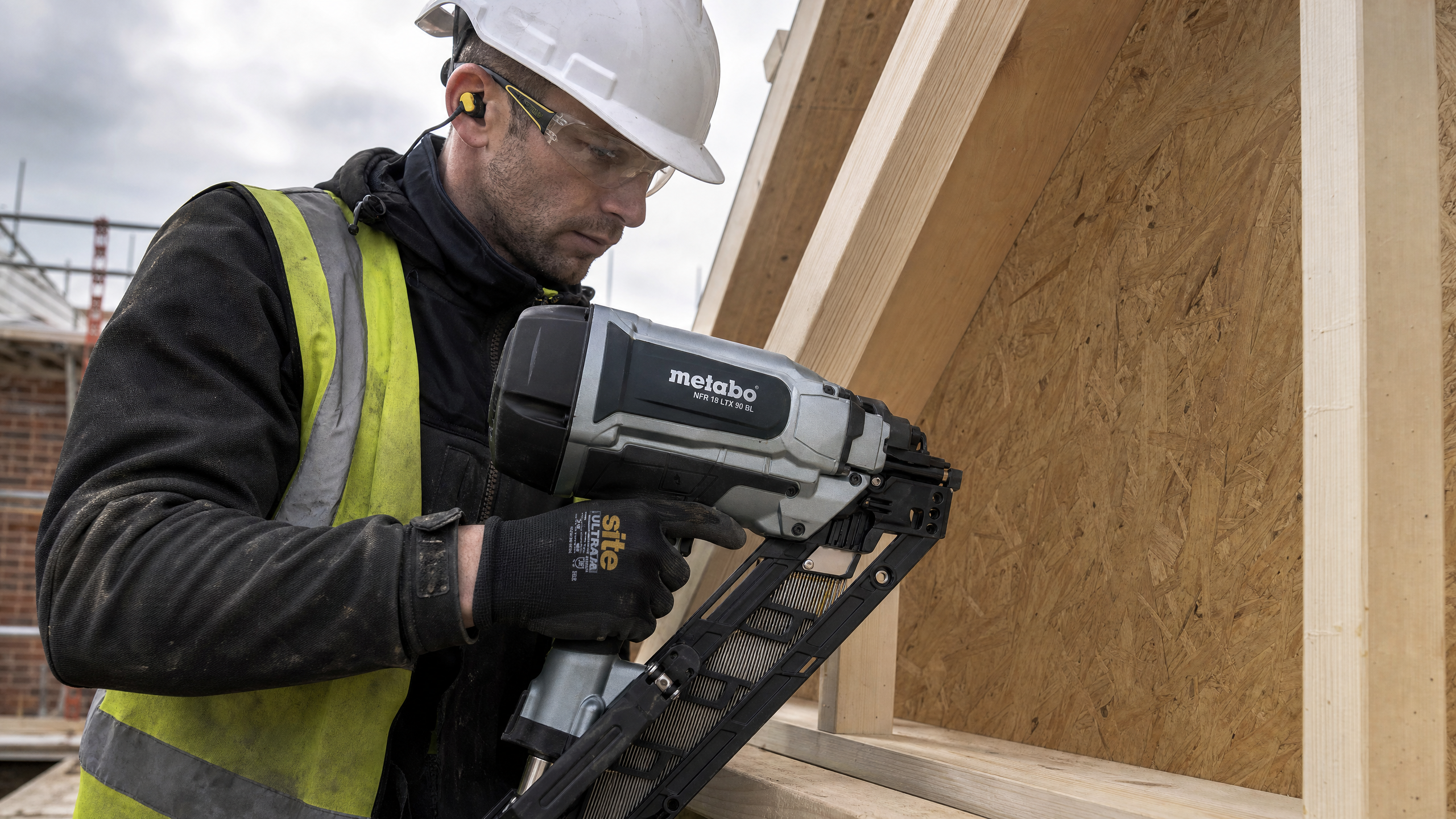
Whether you are fixing joists, installing decking, or constructing fencing, choosing the right collation type ensures reliable performance. They come in various sizes and drive profiles, including smooth shank nails and high-holding screw shanks.
Types of collation
Matching the right collation type to your tool and working environment prevents frustrating job site jams.
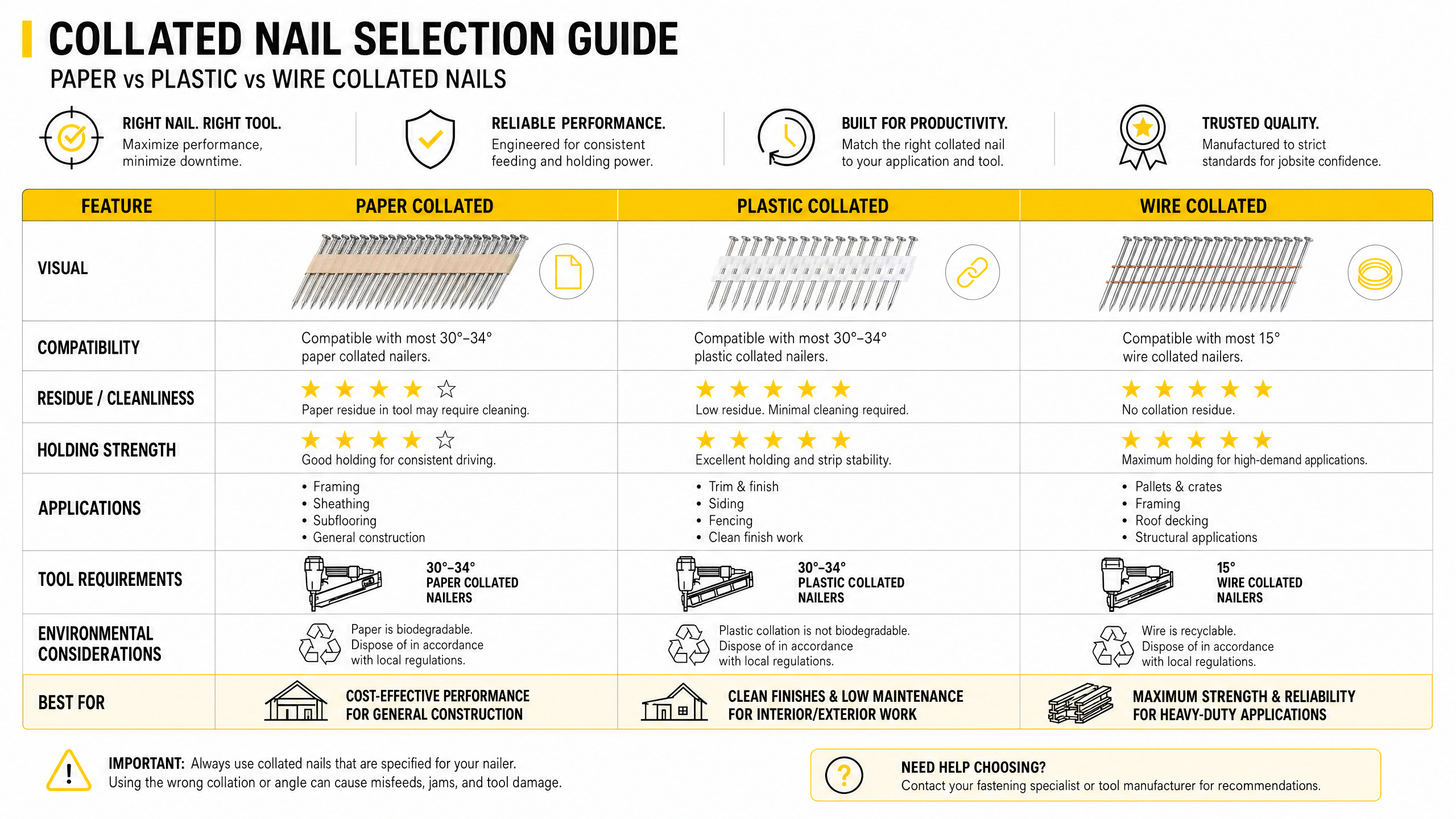
1) Paper collated nails
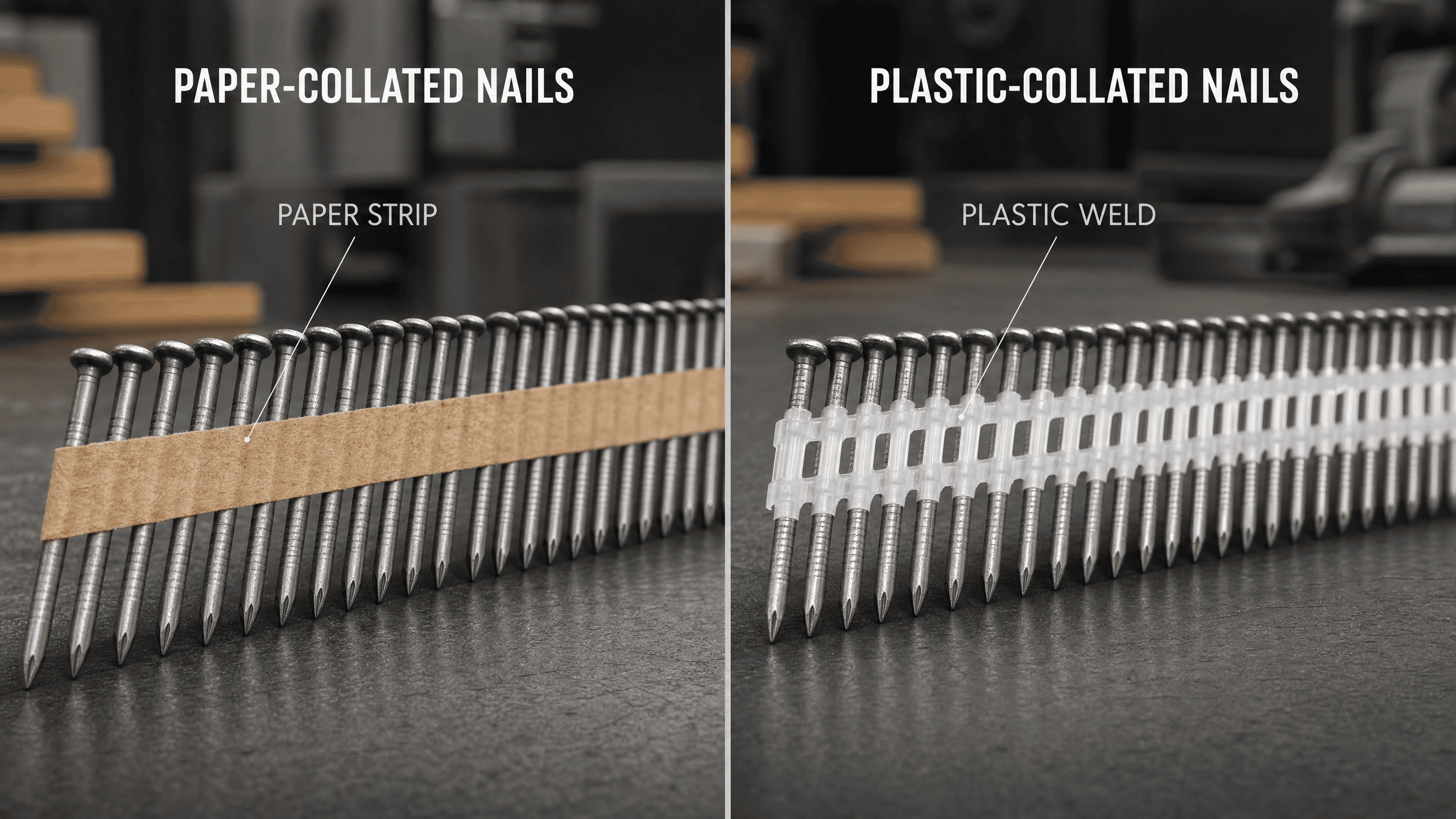
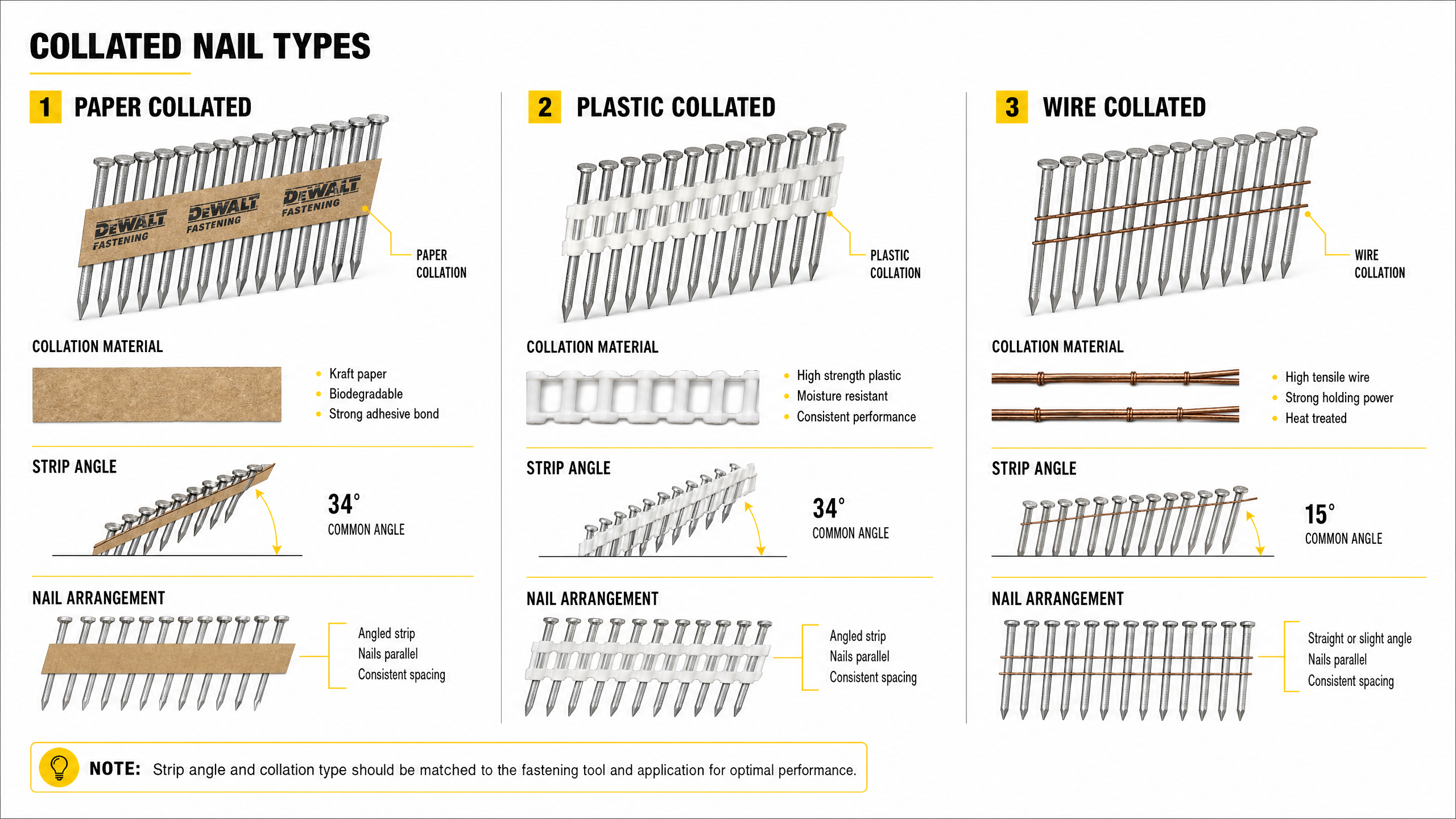
Preferred by finish carpenters and roofers, paper collated nails deliver a clean drive with zero flying plastic fragments. Paper tape strips fit steep magazine angles, helping tradespeople fix nails comfortably inside restricted roof trusses. These strip nails collapse neatly without jamming driver channels or building up behind nosepieces. Storing your stock in dry conditions ensures the paper tape stays intact for smooth, continuous firing on site.
2) Plastic collated nails
Bound in rigid plastic strips, plastic collated nails offer excellent weather resistance when stored in open vans. These nails are typically set at 21-degree angles, accommodating thicker-gauge shanks for heavy-duty construction tasks. During firing, small plastic fragments shatter away from the nail head. While highly suitable for rough site framing, the flying plastic bits mean operators must wear eye protection to work safely during rapid fixing routines.
3) Wire collated nails
Joined by fine welded metal wire, wire collated nails are supplied in high-capacity circular coils. They feed smoothly through heavy-duty pneumatic coil nailers, making them ideal for continuous roofing or timber cladding installations. Using wire collated nails allows tradespeople to drive hundreds of fasteners before reloading. To protect outdoor timber projects against early weathering, always select stainless steel collated nails or hot-dipped galvanised fixings for long-term corrosion resistance.
How do collated nails work in a nail gun?
Collated fasteners allow continuous, automated fixing on site without handling individual nails. A spring-loaded magazine pusher drives the nail strip forward, aligning the lead fastener directly under the driver blade.
When you depress the contact element and pull the trigger, compressed air or gas from internal fuel cells propels the driver blade downward. This force drives the fastener into wood while shearing it cleanly from the collation material.
The process leaves minimal collation debris inside the drive channel. Pneumatic and gas units reset instantly, allowing tradespeople to effectively secure structural timber across different applications on their next project.
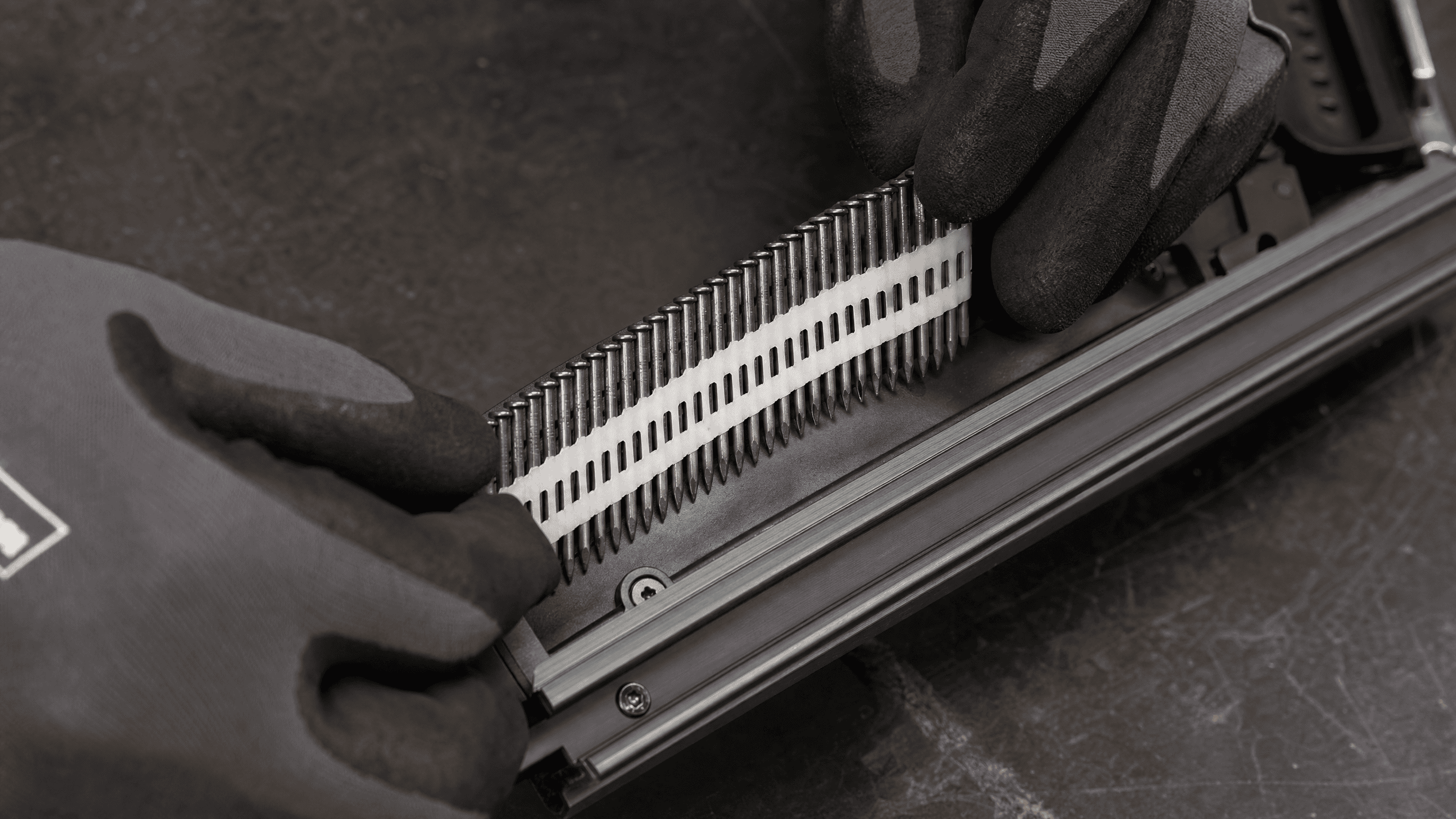
Collated nail options at Betco Fasteners
Explore the wide range of collated fasteners designed to suit demanding site fixing applications:
Brad nails
Stocking premium brad nails ensures clean, subtle fixing when installing decorative skirting boards, architraves, and delicate cabinetry trim. These thin 18-gauge wire fasteners leave minimal entry holes across second-fix carpentry work. Available in galvanised and bright steel finishes, our range covers every internal joinery requirement for your specific needs.
Coil nails
High-volume site tasks like shed building and roof decking run smoother with coil nails loaded into pneumatic coil nailers. The continuous wire collation delivers hundreds of uninterrupted drives per coil, saving time.
Finish nails
Sixteen-gauge fasteners offer exceptional holding strength for door linings and heavy interior moulding applications. Using durable finish nails provides strong mechanical fixing without splitting decorative timber trim. Select stainless steel collated nails to prevent rust staining on damp job sites.
Flooring nails
Designed for hardwood tongue-and-groove boards, serrated flooring nails drive at precise 45-degree angles into subfloor joists. Their ribbed shanks hold subfloors rock solid, preventing boards from creaking over time.
Headless pins
Ultra-thin 23-gauge headless fasteners secure fine glass beads and decorative trims without splitting thin timber edges. Loading headless pins leaves clean, barely visible drive holes that require no filler.
Ring shank nails
Heavy-duty annular ring profiles provide maximum withdrawal resistance across framing and decking projects. Buy ring shank nails to provide improved grip for roofing applications. Our durable ring shank nails grip tight into timber fibres, preventing nail heads from popping over time under heavy site loads.
Strip and framing nails
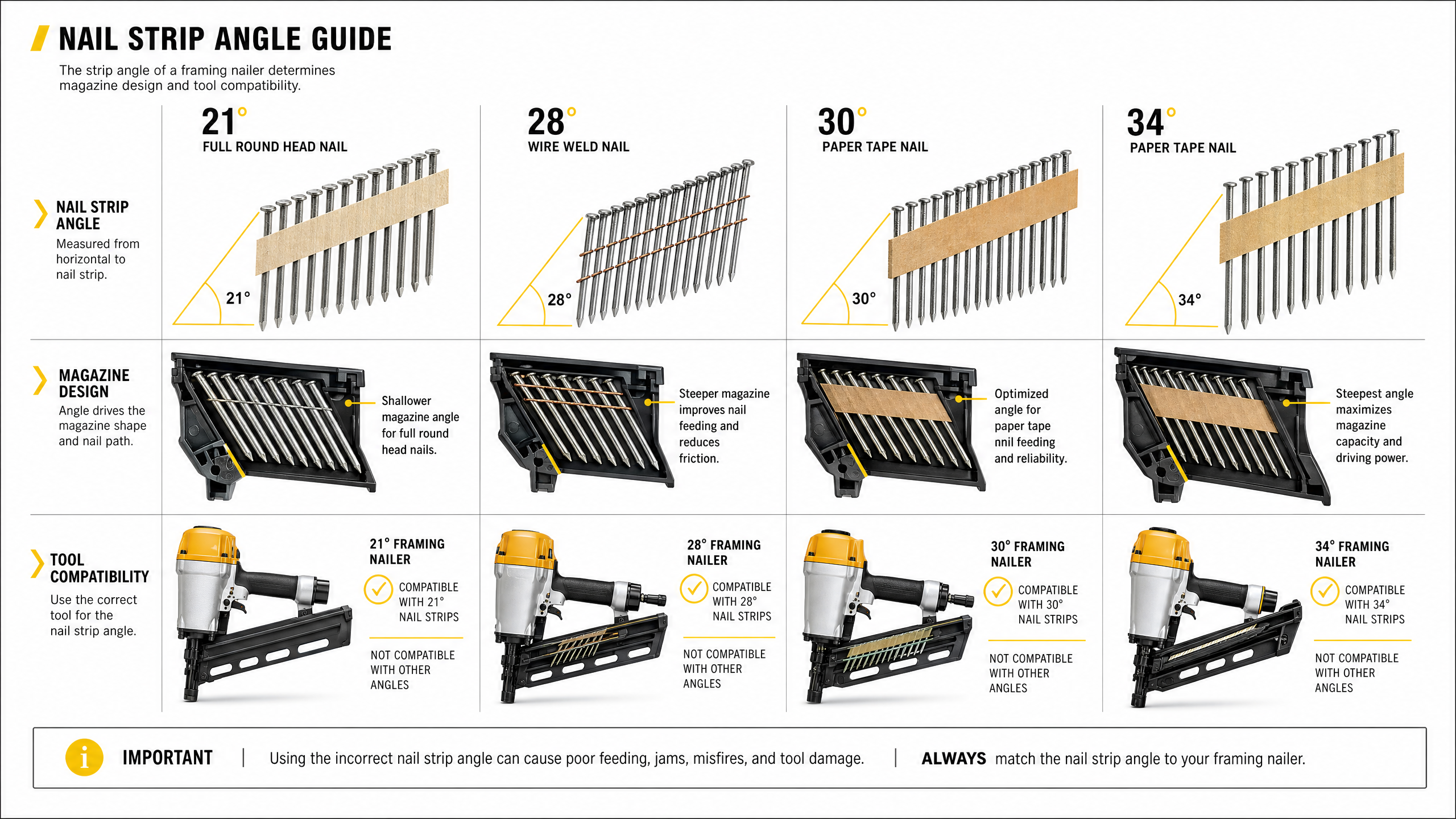
Our heavy-duty strip and framing nails deliver exceptional structural strength across major timber construction projects. Available in paper collated nails, plastic collated nails, and wire collated nails, these strip nails fit different nail guns. Choose from various sizes and different angles to suit 34-degree and 21-degree framing tools on site.
By material
Choose from different materials such as galvanised, plastic, or stainless, which are all explained below:
Galvanised nails
Zinc-coated steel fasteners provide solid corrosion protection across standard construction and roof framing applications. Standard electro-galvanised options work well for protected interior structural work, whilst hot-dipped galvanised fixings resist external dampness. Galvanised nails give tradespeople a reliable, cost-effective fastener for timber studwork, joists, and floor decking where heavy weather resistance is not strictly required.
Plastic nails
Non-metal composite fasteners eliminate blade damage when cutting timber and provide non-conductive fixing properties. Plastic nails resist chemicals completely, preventing dark surface staining across delicate timber joinery installations.
Stainless steel collated nails
Opting for stainless steel collated nails provides permanent rust protection for exposed outdoor carpentry. Grade 304 steel handles standard external decking and fencing, whereas grade 316 marine-grade steel resists severe saltwater corrosion. Stainless steel stops natural timber tannins from causing unsightly black marks on cedar or oak cladding. Loading stainless paper collated nails, plastic collated nails, or wire collated nails into your framing nail gun ensures your next project lasts.
Contact us
Ditch the hammer and use a nailer with our essential selection of collated nails. These are designed to fit many well-known nailer brand options. Work indoors, outdoors, or in tight spaces – wherever you need to work is fine!
Contact us in these ways:
- Phone – 0121 552 8400 – call us today
- Emails – send to sales@betcofasteners.com
- Contact us – complete our contact form here