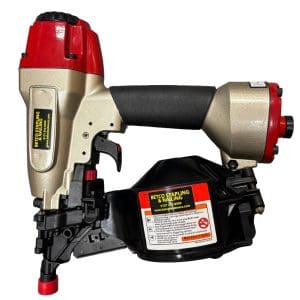
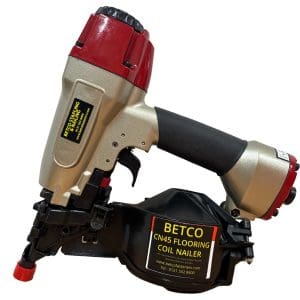
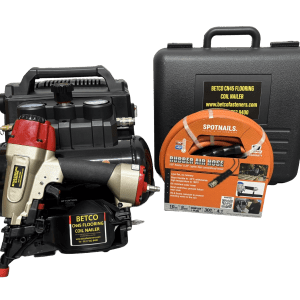
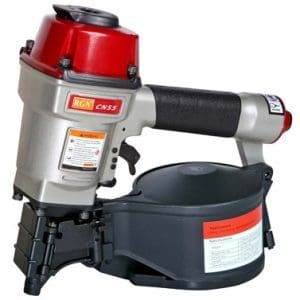
What are pneumatic nailers?
A professional pneumatic nail driver is an essential investment for any workshop looking to maintain flawless accuracy and rapid assembly times. As there is no heavy battery pack attached, an air-driven nailer provides a much lighter, better-balanced chassis than cordless tools. This lightweight design allows carpenters to transition seamlessly from heavy-duty structural timber framing to intricate, detailed work. Pneumatic air nailers operate instantly upon trigger pressure, ensuring clean, accurate results without the annoying motor lag common in modern battery cells.
To work with these systems on a commercial project, you must couple the tool with a reliable air compressor and flexible airline hoses. This configuration is highly popular in static production lines where constant firing power is critical to match tight manufacturing schedules.
From industrial first fix nailers for heavy carcasses to an ultra-fine pin gun or brad nailer for flawless cabinetry, air tools provide the high power required by trade users. Choose your required pneumatic gun to see full trade pricing and dispatch options.
Types of pneumatic nail guns
Most professional nailer categories are pneumatic-compatible, meaning they plug air lines directly into your workspace. Only electric and cordless nail guns run without a compressor setup. Due to this simple mechanical design, pneumatic technology remains the most common trade choice for high-volume carpentry and roofing contracts.
Products available from Betco Fasteners
Browse our pneumatic nail gun models to find the right configuration tailored for your specific commercial woodworking and framing applications:
1) Brad nailers
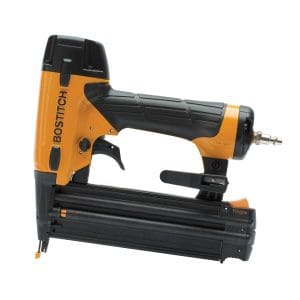
This pneumatic tool line drives fine-wire fasteners flat into internal timber junctions, helping joiners complete demanding cabinet-making and detailed trim installations without marring finished surfaces. View brad nailers here.
2) Coil nailers
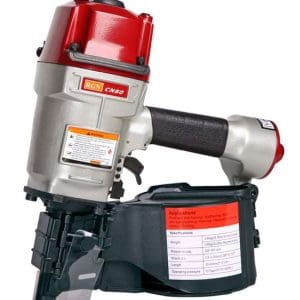
Using long, flexible wire-collated strips, these high-production nailers provide the non-stop firing capacity needed for rapid framing, subflooring, and heavy industrial pallet work. View coil nailers here.
3) Combi nailers
Combining versatility and power, this pneumatic configuration runs multiple fastener gauges smoothly, making it a highly productive option for contractors managing varied on-site tasks. View combi nailers here.
4) Corrugated fasteners
An essential for commercial joinery workshops, this air driver creates tight mechanical links across timber frame corners, significantly boosting joint durability under tension. View corrugated fasteners here.
5) Flooring nailers
A pneumatic nailer sits flat on the floorboards to drive fasteners perfectly into the tongue of the timber profile. It achieves this while driving structural fasteners with absolute depth consistency and minimal operator strain. View flooring nailers here.
6) Pin nailers
This ultra-compact tool drives headless 23-gauge pins flat, providing an almost invisible mechanical fix for delicate picture frames, softwood glazing beads, and intricate antique restorations. View pin nailers here.
7) Plastic nailers
Engineered to fire non-corrosive composite fasteners, this unique line avoids rust staining on natural timber facades and protects expensive blades during subsequent thickness planing or moulding. View plastic nailers here.
8) Roofing nailers
Featuring a hardened nosepiece and adjustable shingle guides, these heavy-hitting air nailers streamline major battening and sarking operations out in unpredictable British weather. View roofing nailers here.
9) Second fix nailers
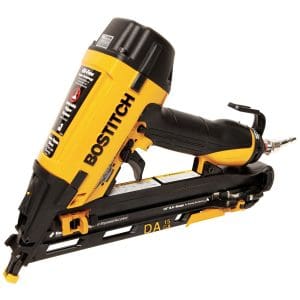
Operating cleanly on compressed air lines, these precise tools deliver the immaculate depth regulation required to pin internal door stops and premium hardwood skirting boards. View second fix nailers.
10) Strip and framing nailers
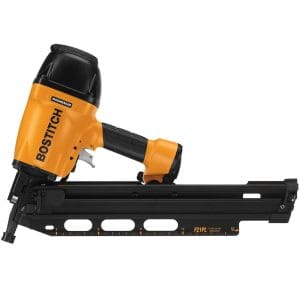
These heavy structural drivers deliver maximum cylinder impact, allowing timber framers to erect internal stud walls and timber carcasses quickly, safely, and efficiently. View strip and framing nailers.
When to choose an air nailer
For extensive structural contracts like timber framing or long runs of commercial fencing, bypassing electric and battery power in favour of air tools is a matter of mechanical reliability. Cordless tools are undeniably convenient for moving around a site, but their complex internal electronic components and heavy batteries add significant weight. Electric plug-in models are generally built for light DIY use and cannot handle the relentless duty cycles of a busy commercial workshop. Heavy-duty air-driven nailers bypass these limitations by relying on a simple, rugged pneumatic piston.
Operating your workshop kit from a central compressor line ensures your team gets maximum sinking consistency on every shot. Air-powered models maintain uniform depth regulation regardless of whether you are driving fine pins or firing larger nails into heavy structural timbers. The absence of electrical circuitry also makes these tools exceptionally resilient against fine sawdust and damp outdoor conditions.
Important pneumatic nail gun features
Compare these essential operational elements to secure the right pneumatic configuration for your daily projects:
| # |
Feature |
Description |
| 1 |
Actuation mode switch |
Swaps the tool quickly between rapid bump-firing for decking and single-sequential shots for precise second-fix joinery |
| 2 |
Air pressure compatibility |
Connects smoothly to standard industrial workshop compressors, providing consistent, rapid-fire power that never drops off when driving fasteners into dense structural hardwoods |
| 3 |
Depth adjustment control |
Gives carpenters complete control over countersinking depths, achieving flat, professional results without marring the timber surface |
| 4 |
Dry-fire lockout system |
Safeguards the tool nose mechanism by halting trigger function when the fastener supply is depleted |
| 5 |
Ergonomic handle design |
Distributes tool weight evenly through a contoured handle, improving grip control during demanding outdoor work |
| 6 |
Fast firing rate |
Uses rapid air recycling valves to drive fasteners as fast as the operator can press the contact safety nosepiece |
| 7 |
Jam clearance latch |
Clears buckled fasteners out of the primary chamber in seconds, minimising tool downtime on the site |
| 8 |
Magazine capacity |
Accommodates full strips of wire or plastic collated fasteners to support continuous, high-volume production framing lines |
| 9 |
Nail size compatibility |
Covers a versatile range of fastener gauges, allowing operators to tackle both light internal trim and heavy carcass framing |
| 10 |
Operating pressure regulator |
Governs the input airflow to prevent unnecessary tool wear and ensure stable, predictable driving impact forces |
| 11 |
Tool weight balance |
Optimises the physical centre of gravity across the entire pneumatic nail gun, allowing for easy single-handed manoeuvring in tight joists |
What are the main benefits of air nailers?
Discover why switching to a commercial compressor setup offers massive performance advantages for high-volume structural work:
- Affordable fastening solutions – as the tool bodies use simple mechanical setups rather than expensive batteries, they offer a highly cost-effective option for equipping entire workshop teams
- Exceptional nail depth consistency – a dedicated compressor line ensures uniform pressure behind the piston, sinking every fastener flush without leaving proud heads in your structural timber layouts
- High-speed rapid firing and driving power – operating on continuous air pressure allows you to drive nails into dense timbers instantly, accelerating your production framing speed significantly
- Lightweight tool handling – the stripped-back mechanical design makes a huge difference to daily physical handling, allowing your crew to work effortlessly in tight corners and rafter spaces
- Long-term durability – built without fragile integrated circuit boards, a pneumatic nail gun handles heavy impacts, fine sawdust, and harsh site handling without internal electronic component failure
- No ramp-up time – the air piston fires the exact millisecond you touch the trigger, removing the annoying motor spin lag common in alternative electronic tools
- Reduced operator fatigue – dropping the bulky internal motors found in cordless models gives these tools a balanced chassis, reducing wrist strain over demanding overhead shifts
- Suitable for heavy-duty work – these powerful systems pack significantly more power than battery options, making them the absolute trade standard for heavy construction, joist hanging, and subflooring contracts
Choosing a compatible air compressor
Setting up a highly efficient pneumatic system requires matching your tool’s air consumption directly to the performance output of your workshop pump. Always check the operating pressure and volumetric flow demands of your gear before hooking up your lines. Most lightweight brad and second-fix tools run between 60 and 100 pounds per square inch (PSI). As these finish tools only consume a small volume of air per cycle, you can easily run them off compact portable compressor models.
Heavy structural framing setups and industrial coil tools demand a much higher volume of continuous air to maintain their driving force. To keep these large-scale pneumatic nailers firing reliably without sudden pressure drops during rapid bump cycles, you need a high-output compressor with a larger storage tank. Using an undersized tank will cause the motor to cycle constantly, leading to premature wear and unevenly driven fasteners on the job.
Buy any of the following air compressors to power your pneumatic nailers:
Contact us
Speak to our trade experts today for technical guidance on application compatibility, matching compressor accessories, site safety compliance, and trade account pricing.
Contact us in these ways to discuss our wide selection of pneumatic nailers:
- Phone – 0121 552 8400
- Email – sales@betcofasteners.com
- Contact us form – available at our Contact Us page