Best Roofing Nailer Guide: What Roofing Nailers Are Used For & How to Use One
On this page24 sections
Finding the best roofing nailer remains a top priority for competitive timber framing and roofing crews across the UK. These specialised tools help roofing professionals secure felt, batten, and shingles rapidly during major residential and commercial installations. The modern power tool industry offers varied designs, meaning you must weigh up how different types handle consistent site abuse.
Managing a major project means you need to fire nails quickly without suffering constant double-firing or jammed collation tracks. Our guide explains how experienced roofers maintain consistent air pressure, choose a proper nail size, and maximise tool durability.
What is a roofing nailer?
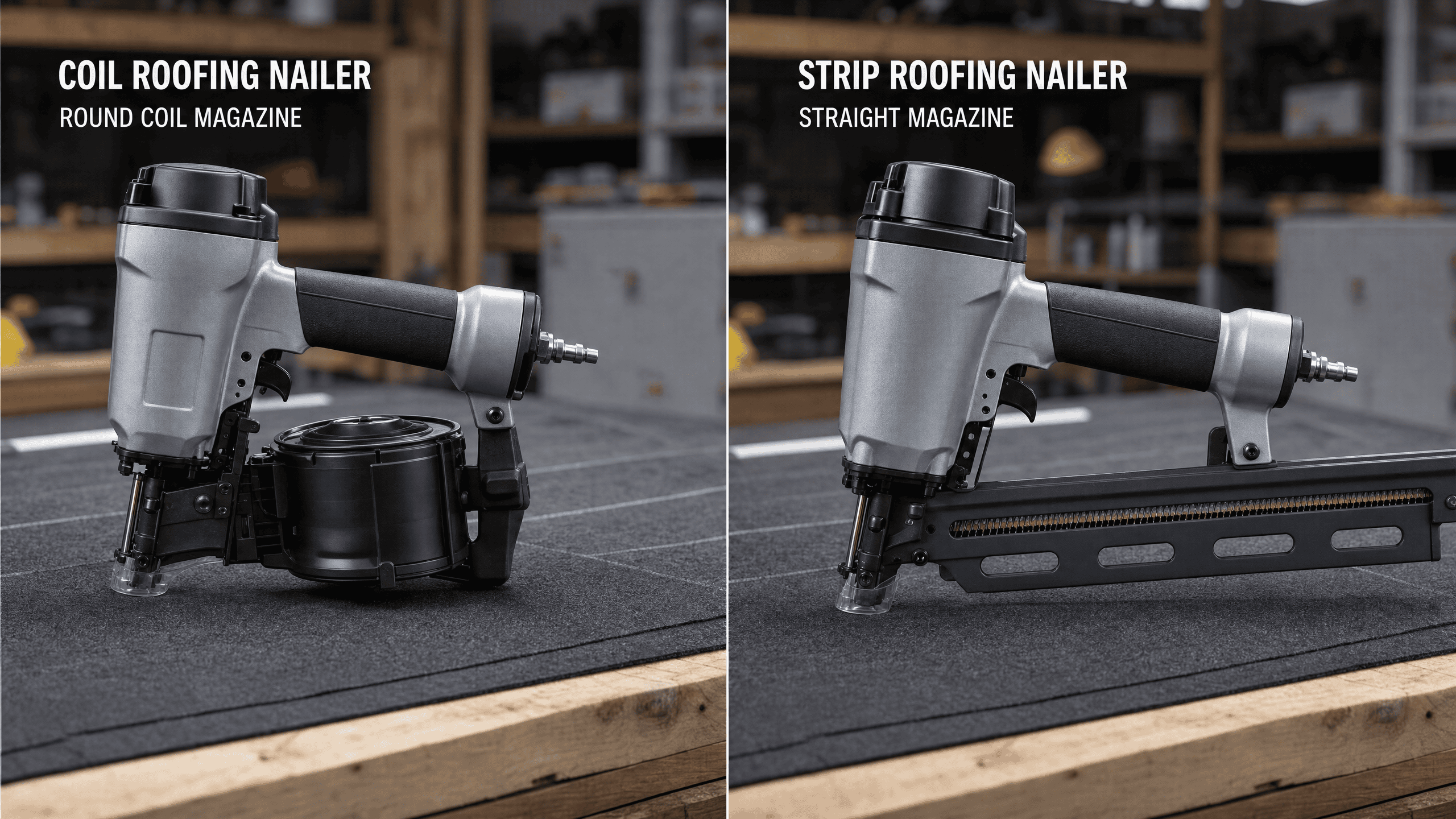
A roofing nailer is a dedicated heavy-duty tool built specifically for high-speed roof covering installations. Unlike standard first fix tools, it features a round drum magazine designed to hold a massive spiral bundle of wide-head nails.
This technical design means you carry more nails up the scaffolding, allowing you to work continuously across large projects. Running on compressed air gives the tool consistent driving energy that easily outperforms any standard hand hammer on the roof.
Best roofing nailer benefits
All the following are the benefits that can be enjoyed when you buy a best nail gun for roofing:
- Fast shingle installation – using a high-speed bump fire technique helps teams complete demanding commercial roofing jobs quickly
- High nail capacity – storing hundreds of wire-collated fasteners allows a professional coil roofing nailer to run continuously
- Improved site safety – clearing away loose components protects your workspace, ensuring safe rafter access for site teams
- Less user fatigue – opting for an ergonomic, lightweight aluminium housing minimises muscle exhaustion during overhead tasks
- Low operational costs – relying on a standard workshop power source eliminates expensive replacement cells common with other brands
- Precise firing control – adjusting the tool-free mechanical depth adjustment dial prevents over-driving fasteners through fragile asphalt felt
- Reduced reloading downtime – large drum magazines hold substantially more fasteners, outperforming the restricted capacities seen on most models
- Strong structural joints – delivering massive driving force ensures solid timber clamping action that standard wireless competing models cannot match
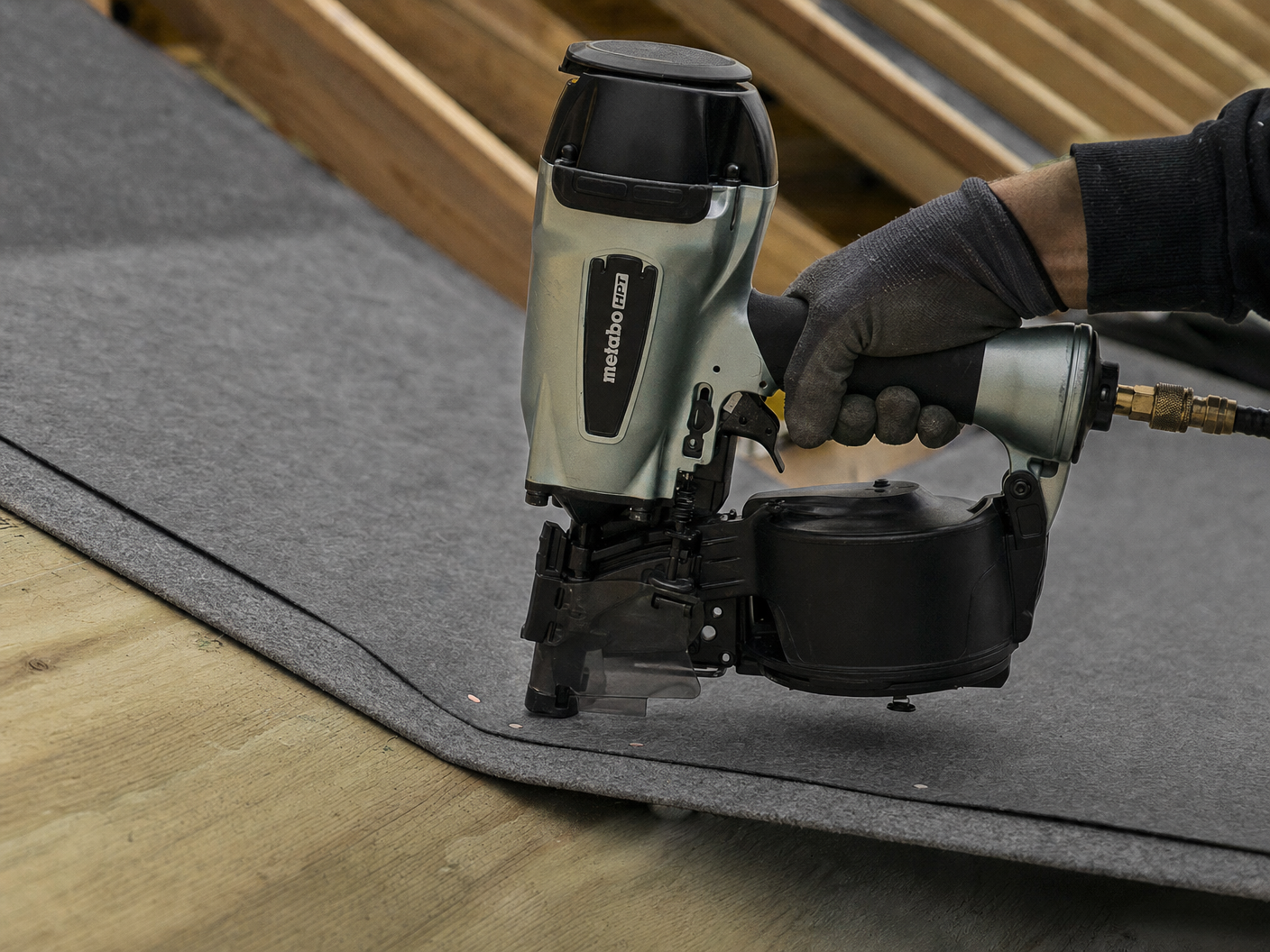
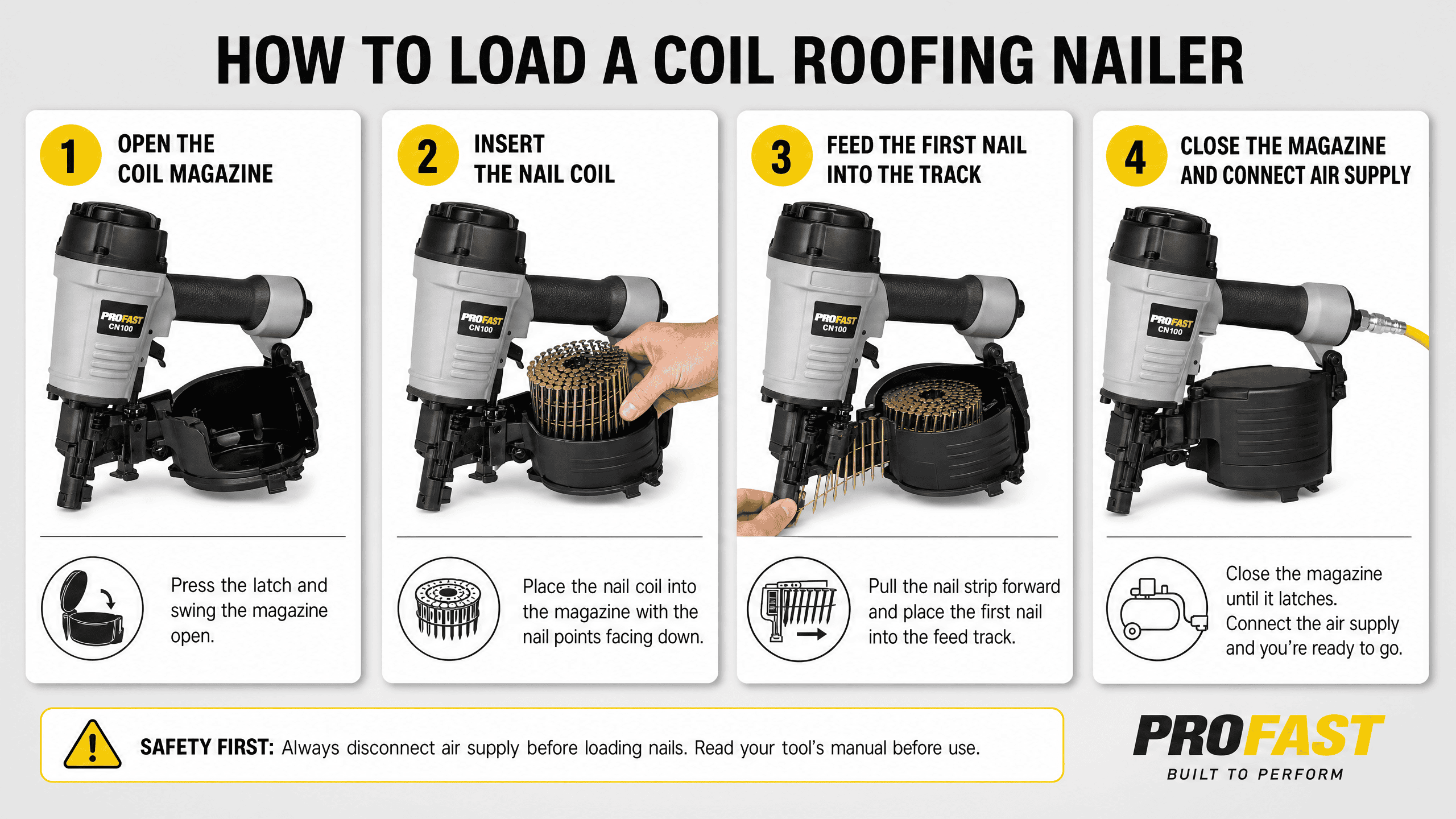
Step-by-step – How to use a roofing nailer (pneumatic model assumed)
Follow our step-by-step guide to successfully use a roofing nailer. Most models are pneumatic, so the approach outlined below is for a pneumatic roofing nailer:
- Wear PPE safety clothing – wear impact safety glasses and sturdy protective boots
- Tool nose inspection – clear foreign debris away from the driver
- Verify your roofing nails stock – gather the correct gauge wire-welded coils
- Join the feed line – click the snap coupler onto the tool
- Operating parameters setup – run the air compressor within safe limits
- Open the canister door – drop the spiral bundle onto the tray
- Tune the flush finish – modify the nose wheel for tight spaces
- Steady the roof covering – keep felt or batten lines perfectly straight
- Support the overall weight – the tool must be steady and well-balanced
- Initiate the first shot – pull the trigger once to test penetration
- Run the installation lines – proceed systematically along the structural rafters
- Evaluate your structural joints – ensure no proud fixings pierce the barrier
- Isolate the line pressure – detach the hose assembly from the tail
Cordless model process changes
When learning how to use a roofing nailer the process is slightly different. If you are using a cordless model such as the Spotnails SBFN3490 Cordless 1st Fix Framing Nail Gun (50-90mm), these steps from above will change:
2b) Inspect the battery tool – check the nose tip and battery housing mechanism
4b) Connect the wireless power – slide the charged lithium-ion pack onto the chassis
5b) Power up the system – switch on the digital interface module until active
13b) Unplug the wireless pack – slide off the battery module before regular servicing
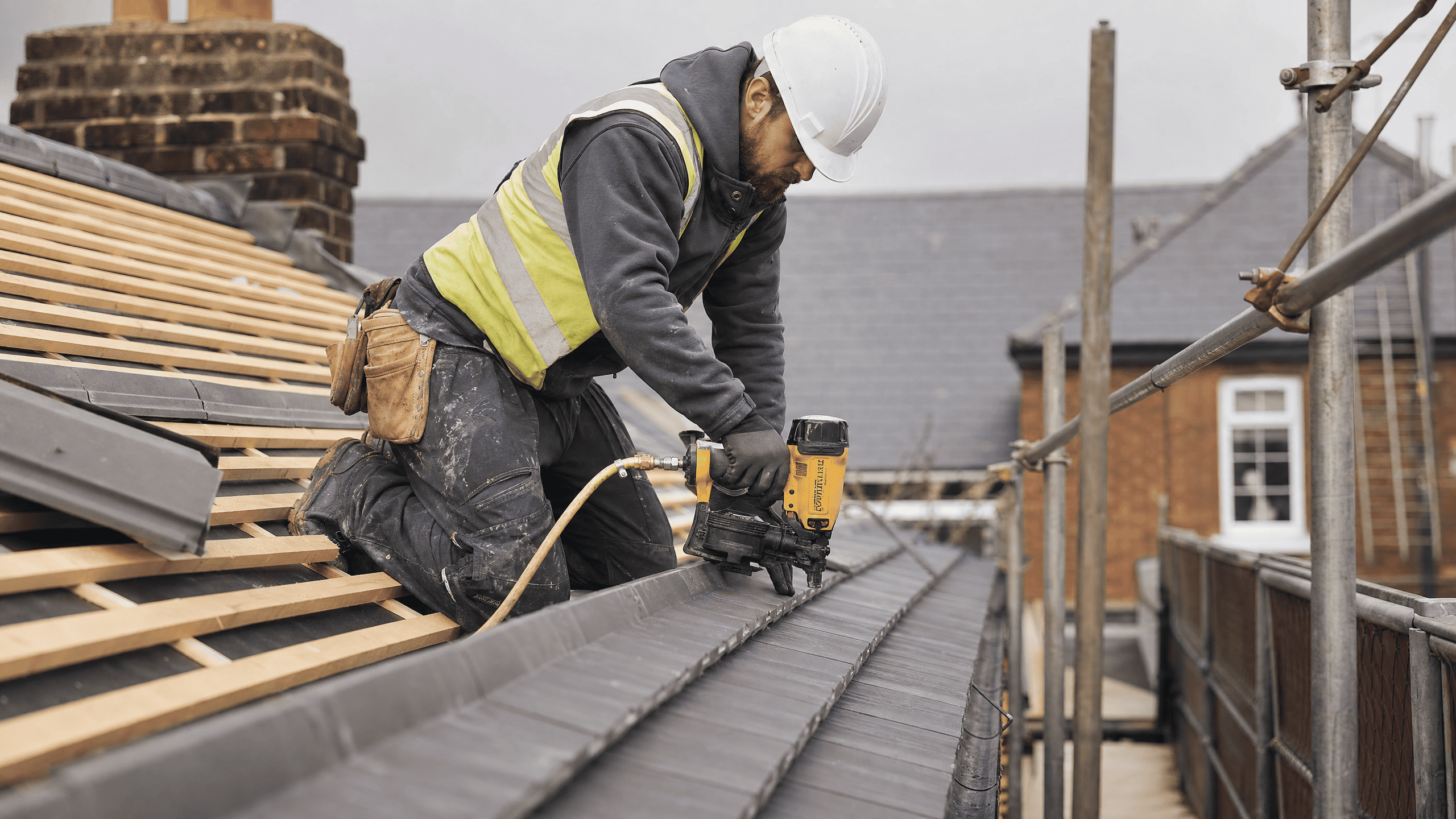
What is a roofing nailer used for?
Site contractors deploy high-capacity roofing nailers across applications like:
1) Asphalt shingle fixing
Drive galvanised fasteners through bituminous sheets cleanly. Always be careful that the tool nose safety does not tear fragile materials.
2) Cedar shingle roofing
Fix timber tiles systematically along chalk guide lines using balanced power tools, which also reduces arm strain.
3) External timber cladding
Install protective timber shiplap boards smoothly, using high nail capacity to cut down on material loading breaks.
4) Roof batten installation
Anchor rows of counter battens perfectly straight across structural rafters during large commercial timber frame building construction.
5) Roof deck sheathing
Secure thick oriented strand board decking panels smoothly, ensuring every fastener provides maximum structural holding power.
6) Roof felt fixing
Fasten protective weatherproofing layers onto external timber decks using wide collated nails, which prevent high wind tearing.
7) Roofing underlay fixing
Lay down essential modern vapour barriers securely before your primary roof covering installation begins on site.
8) Shed roof construction
Build durable wooden storage buildings rapidly within busy regional manufacturing workshops using a lightweight roofing nail gun.
9) Soffit board fixing
Pin timber roof boards securely from underneath, providing professional contractors with excellent line clearance in tight eaves spaces.
10) Timber roof framing
Secure lightweight internal bracing timbers cleanly, which showcases the sheer versatility of high-pressure pneumatic nail guns on site.
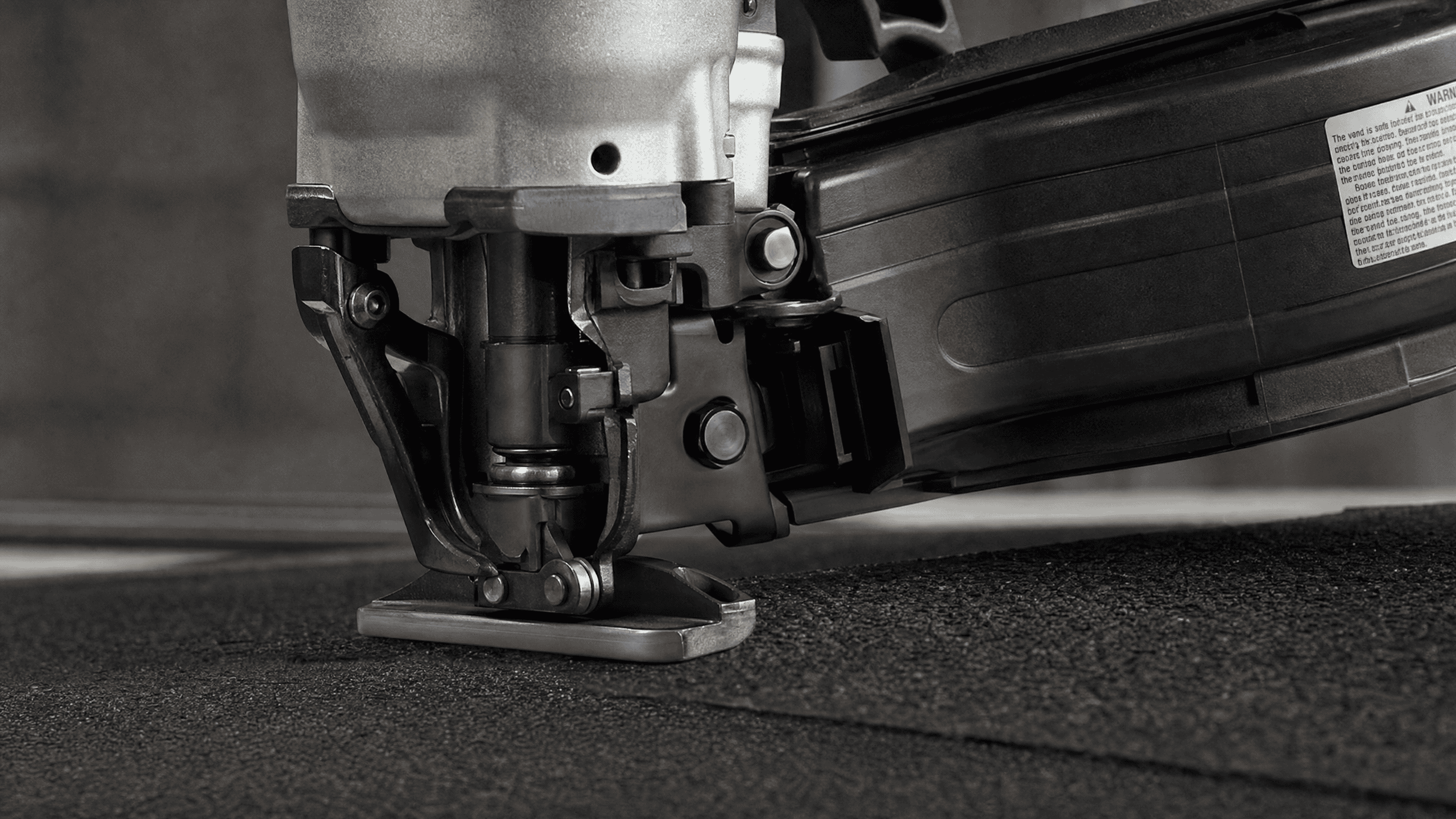
What is the best nail gun for roofing?
Buying the best roofing nailer entirely depends on the type of jobs you usually deliver. As an illustration, below we analyse three of our roofing nailers to help you decide which might meet your needs:
1) Bostitch F33PT-E Air 34° First Fix Framing Nailer (50-90mm)
Roofing contractors rely on this premium air tool to drive heavy structural fasteners into dense timber. It uses a high-grade push-button depth gauge to handle your changing timber profiles cleanly on site. The tough serrated nose safety prevents annoying slipping when driving fasteners at awkward angles. This is a reliable framing nailer for demanding residential extension contracts.
2) Spotnails SBFN3490 Cordless 1st Fix Framing Nail Gun (50-90mm)
This mobile gasless nailer operates as our only cordless model available for roofing nailing work. It features a reliable brushless motor that works alongside a high-output battery pack to deliver hard-hitting performance. The internal electronics provide a rapid firing cycle, meaning you can drive nails through seasoned structural pine smoothly. It eliminates trailing line hazards more safely when working high up on staging scaffolds.
3) Tacwise KSN90V Air 22° Strip Nailer (50-90mm)
This reliable air-powered tool delivers a constant driving force to install heavy-duty 22-degree plastic-collated fasteners smoothly. It features an impact-resistant magazine track, protecting the feed mechanism against regular site damage. The balanced frame handles beautifully when nailing horizontal floor deck panels or building timber panel sheds in workshops. It hooks up cleanly to any standard workshop airline setup with minimum pressure drop.
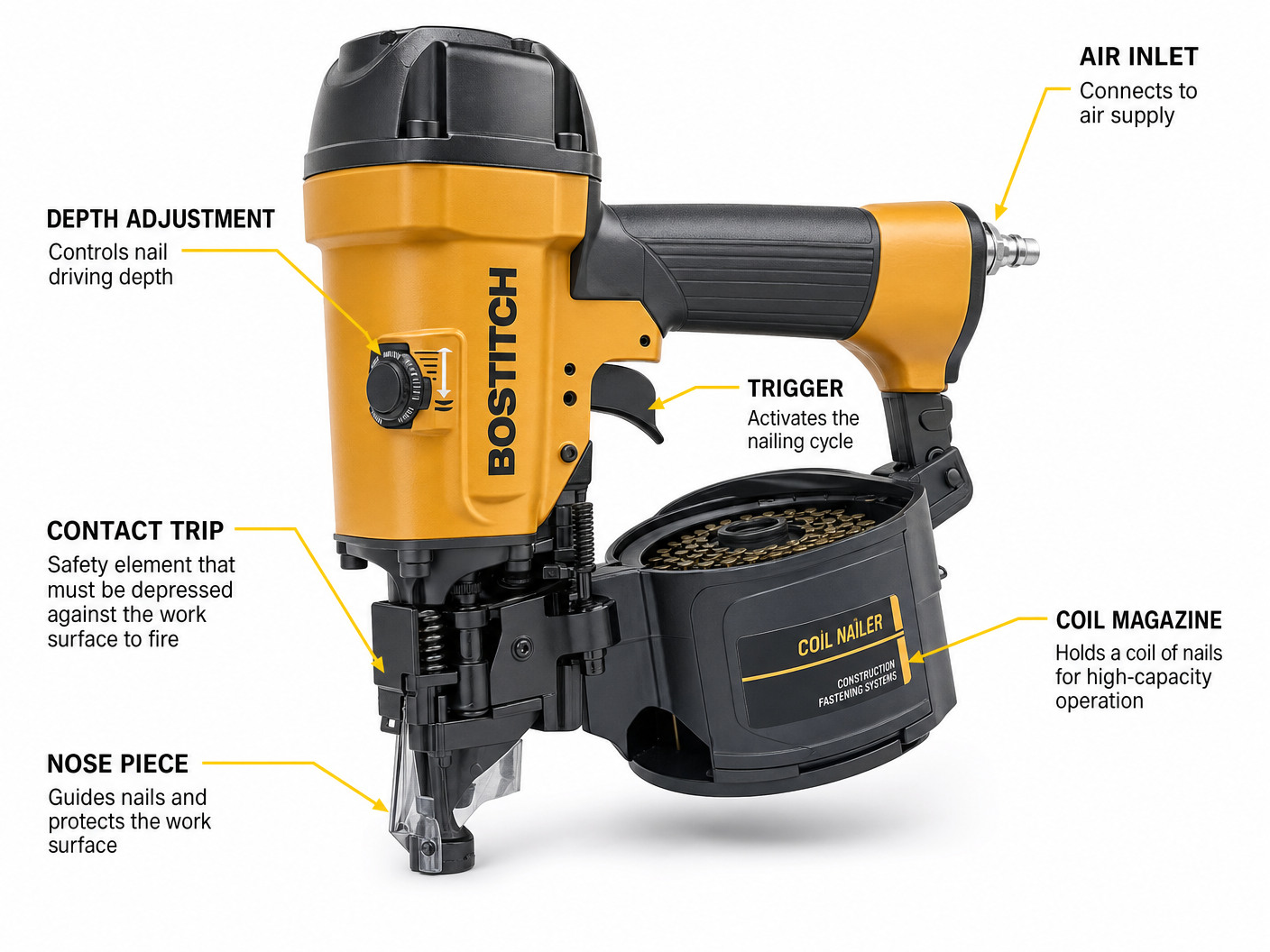
Understanding roofing nail types and collations
- Using the correct roofing nail is just as important as choosing the right tool. We have many roofing nail options available at Betco Fasteners:
1) Wire-welded coil nails
- Most standard coil roofing nailers use wire-collated nails, usually featuring wide flat heads (around 9mm to 10mm) designed to prevent tearing through felt or thin shingles.
2) Hot-dip galvanised nails or stainless steel nails
- For exterior roofing, always use hot-dip galvanised or stainless steel nails to prevent rust
- streaks and structural failure caused by damp weather.
3) Ring shank nails
- Opt for ring shank nails whenever possible; the annular rings bite into the timber framing,
- providing superior withdrawal resistance against high winds.
Contact us
Whether you are looking to buy an air or battery-powered nail gun for roofing, we have the products you need at Betco Fasteners. Why not talk to our team about buying the best nail gun for roofing to meet your needs? We can explain the different features to look for and which size air compressor you might need. We also sell industrial staple guns, which can also be used in certain roofing tasks.
Contact methods are:
- By phone – 0121 552 8400
- By email – send to sales@betcofasteners.com
- Contact form – our contact us page