
Brad Nailer vs Finish Nailer: What is a Brad Nailer Used For? Uses Compared
On this page9 sections
If you are looking to buy a second fix nail gun, then this article comparing a brad nailer vs finish nailer is an essential read. We provide definitions for each as well as a comprehensive features table comparing a brad nailer vs finish nailer.
Of course, if you buy a new nailer, you will also need collated nails. So, also read our detailed sections comparing brad nails vs finish nails. Read on to learn more.
Definitions
Understanding the primary difference between these two second-fix nail guns keeps your on-site work completely pristine. Both use smaller nails, but with key differences:
Brad nailer
A brad nailer fires fine 18-gauge nails that leave a tiny hole in lightweight timber profiles. This gun is the better choice for detailed trim work like narrow scotia beads and delicate mouldings. It prevents thin wood from splitting without needing a heavy air compressor line set up on multi-storey domestic housing contracts. Sometimes called a “micro pinner” these are also available as 21G mini brad nailers, which, as the name suggests, drive even smaller 21G mini brad nails.
Finish nailer
A rugged 16-gauge finish nailer drives thicker pins into dense, thicker materials for maximum structural timber grip. It provides significantly more holding power for heavy interior installations like hanging solid-core doors. The larger wire diameter ensures that wide baseboards stay flat against uneven internal plasterboard wall surfaces all day.
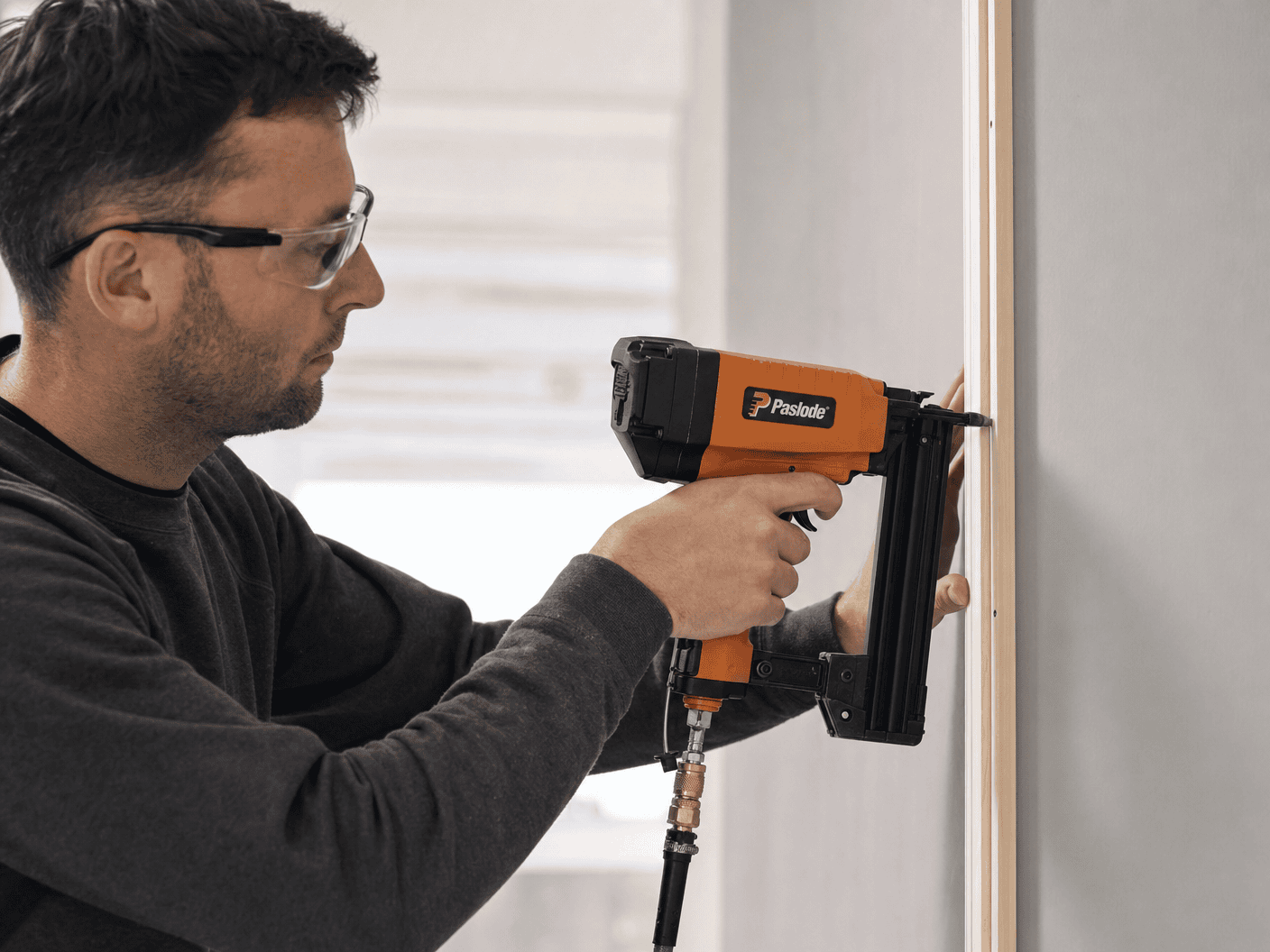
What is a brad nailer used for? – 10 typical applications
Brad nailers have lower holding power than finish nailers. Here are ten common applications:
- Architraves – fastening decorative timber architrave surrounds cleanly around internal door frames with excellent accuracy and speed
- Cabinet assembly – securing thin plywood backing sheets neatly to solid timber kitchen carcass units before final screw installation
- Decorative trims – attaching delicate pine or oak decorative mouldings where fine, low-impact fastening is required on site
- Door casings – pinning lightweight internal door stop beads securely into seasoned timber casing frames without any splitting
- Furniture making – assembling intricate timber framework, rear backing boards, and decorative trim pieces on bespoke high-end household furniture
- MDF panelling – securing modern shaker-style MDF panelling strips flat against level internal walls before the final painting stage
- Picture frames – securing fragile mitred timber corners tightly together while your main wood adhesive cures inside the workshop
- Skirting boards – tacking slim softwood skirting boards flush against flat internal wall surfaces before completing the final decorative finishes
- Wall panelling – installing tongue and groove timber boards smoothly to internal wall battening systems with neat, hidden fasteners
- Window trims – securing slim timber finishing profiles neatly around the internal edges of domestic window frame linings
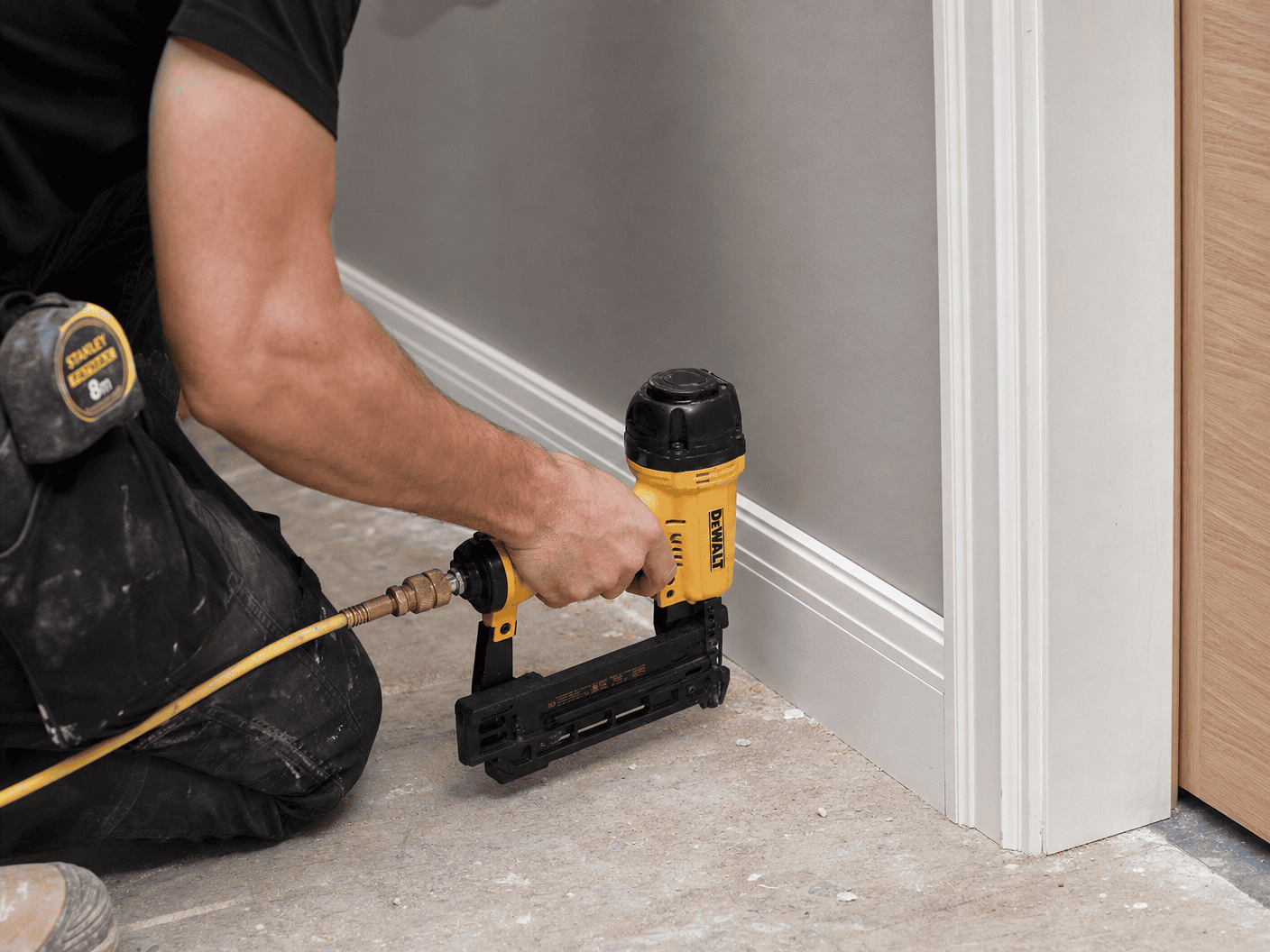
What is a finish nailer used for? – 10 typical applications
Finish nailers are typically larger, heavier, and more expensive than brad nailers. They are both second-fix tools, so they commonly share applications such as skirting boards, architraves and door casings (mentioned above).
Listed below are 10 typical applications suited to finish nailers, where greater holding power is needed:
- Baseboards – installing baseboards securely through heavy plasterboard directly into solid timber wall studs or dense masonry wall plugs
- Built-in furniture – assembling structural timber frames, sturdy internal shelving supports, and heavy wardrobe partitions inside the shop
- Chair rails – fixing heavy decorative timber waist rails horizontally across internal room walls into structural timber studwork
- Crown moulding – securing large, heavy decorative ceiling mouldings firmly into solid timber ceiling joists and wall plate timbers
- Door frames – nailing structural timber door linings and heavy casing frames securely into rough timber stud openings
- Hardwood trims – driving dense, thick-gauge fasteners cleanly into tough oak, ash, or beech structural decorative timber sections
- Stair components – fastening structural timber stair treads, heavy riser boards, and decorative pine balustrades firmly to internal strings
- Timber cladding – securing heavy external or internal shiplap timber boards firmly to treated structural exterior wall batten frames
- Window boards – fixing thick structural timber window sills and internal window boards firmly onto brickwork structural bases
- Wood panelling – mounting heavy, solid wood decorative panelling sheets securely to internal structural timber framework, wall battening systems
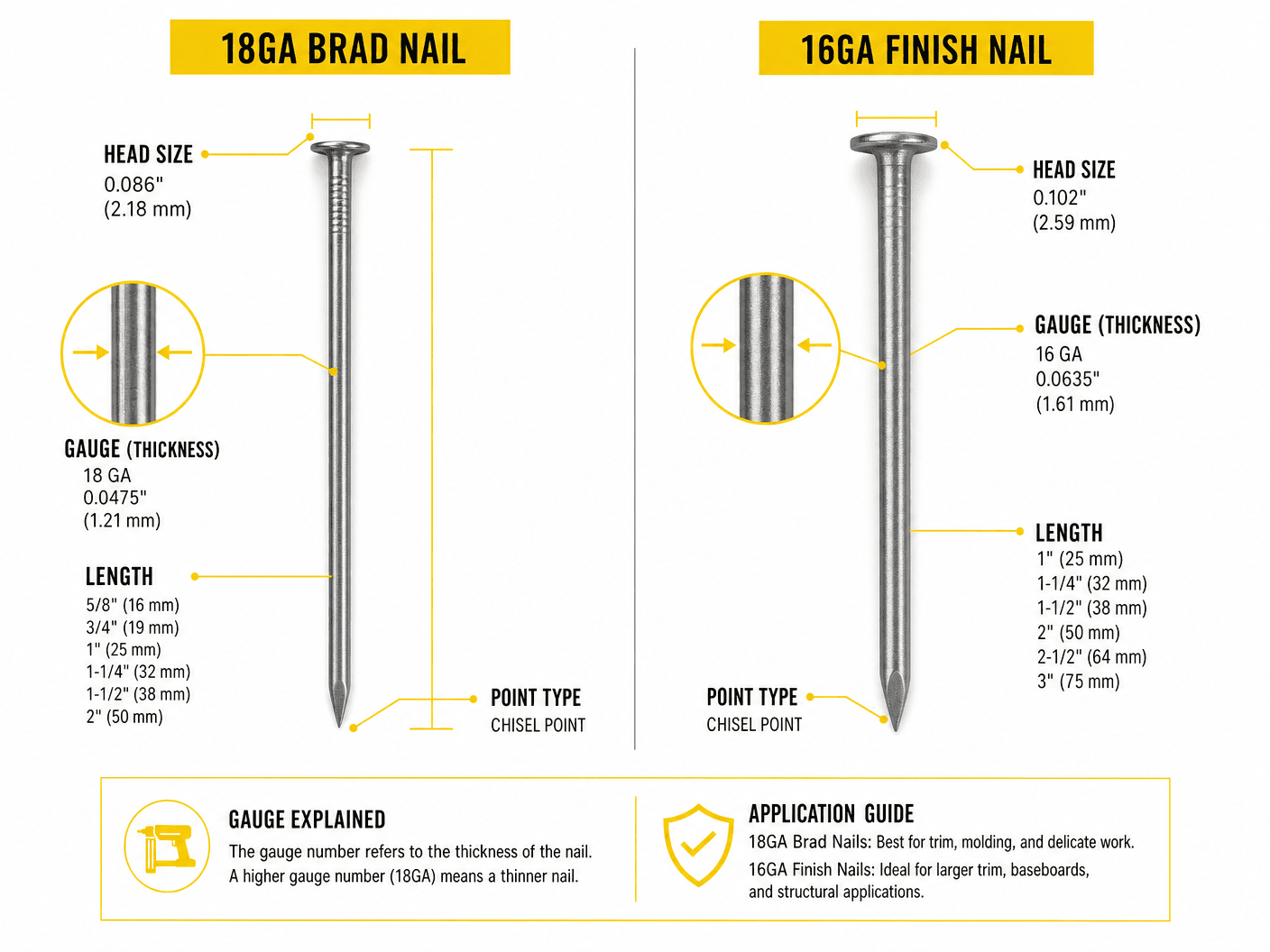
Exploring brad nails vs finish nails table
- Naturally, each nailer type has unique nails. So, view a comparison of brad nails vs
- finish nails below:
| # | Feature | Brad Nails | Finish Nails |
| 1 | Fastener length range | Typically, 15mm to 50mm long | Typically, 25mm to 64mm long |
| 2 | Gauge thickness | Thin 18-gauge wire | Thicker 15 or 16-gauge |
| 3 | Head profile | Small rectangular head | Distinct round or T-shaped head |
| 4 | Holding strength | Low structural grip | High mechanical holding power |
| 5 | Hole size left | Tiny discrete entry hole | Larger holes requiring wood filler |
| 6 | Main usage | Fine decorative trim moulding | Installing baseboards and casings |
| 7 | Primary nailer | Lightweight pneumatic brad nailer | Heavy-duty cordless finish nailer |
| 8 | Timber splitting risk | Extremely low risk profile | Higher risk in thin timbers |
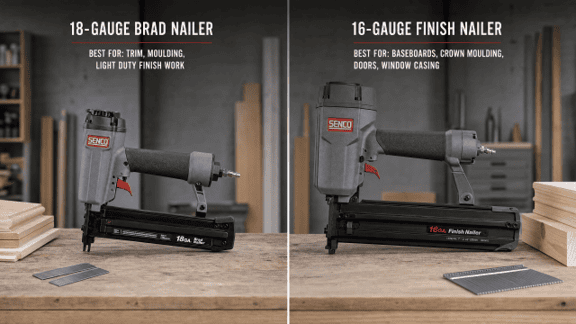
Pin nailer vs brad nailer vs finish nailer functionality table
Choosing the right tool depends entirely on your specific second-fix site task.
| # | Feature | Brad Nailer | Finish Nailer |
| 1 | Clearance space utility | Slim nose clears narrow profile obstructions | Angled body improves tight corner access |
| 2 | Drive depth control | Dial regulates driver pin depth smoothly | Precise mechanical depth adjustment thumbwheel system |
| 3 | Equipment financial purchase | Lower initial price point before buying | Higher initial financial investment required |
| 4 | Gauge size profile | Fires slim 18-gauge wire fasteners | Fires thicker structural 15-gauge pins |
| 5 | Main trade job type | Ideal for delicate finish carpentry trim | Perfect for heavy load-bearing structural installations |
| 6 | Misfire prevention design | Contact trip safety mechanism at tip | Dual-action contact trip safety shoe |
| 7 | Primary power option | Lightweight pneumatic lines or compact battery | Uses a cordless finish nailer setup |
| 8 | Structural hold level | Low holding power for a great nailer | Superior mechanical wood pulling power |
| 9 | Structural joint technique | Works best alongside high-quality wood glue | Creates complete permanent independent joints instantly |
| 10 | Timber fracture risk | Extremely safe for brittle wood profiles | Higher risk on delicate timber pieces |
| 11 | Timber surface impact | Leaves minimal markings needing cosmetic filling | Leaves larger holes requiring professional filler |
| 12 | Magazine loading format | Uses straight collated wire stick strips | Angled or horizontal strip track options |
We hope the above table adds clarity when you are comparing buying a pin nailer vs brad nailer.
In summary
We started our guide by defining both brad nailers and finish nailers, which is important to understand when comparing the differences. The next part is understanding application differences, which, to summarise, include:
- Brad nailer applications – these include architraves, cabinet assembly, decorative trims, and picture frames
- Finish nailer applications – these include baseboards, crown moulding, stair components, and window boards
In terms of fastener Length and Gauge, brad nails typically measure 15mm to 50mm long using thin 18-gauge wire, whereas finish nails range from 25mm to 64mm long using thicker 15- or 16-gauge wire. Brad nails feature a very small rectangular head, leaving a tiny entry hole, while finish nails have distinct round or T-shaped heads leaving larger holes that require wood filler.
Brad nails carry an extremely low risk profile for splitting brittle wood, whereas finish nails have a higher risk of fracturing thin or delicate timber pieces. Brad nailers generally have a lower initial price point and work best with wood glue, while finish nailers require a higher initial financial investment and offer superior mechanical wood-pulling power for independent permanent joints.
Contact us
Suitable for use in second fix construction stages, it is important to understand the differences between a brad nailer vs finish nailer as well as brad nails vs finish nails. Why not speak to our team about buying the best nailer and understanding more about “What is a brad nailer used for”? We can also supply various industrial-strength staplers as an alternative to nailers.
Contact methods include:
- By phone – 0121 552 8400
- By email – send to sales@betcofasteners.com
- Contact form – our contact us page allows you to complete this online