

Galvanised vs Stainless Staples: Stainless Steel Staples & Outdoor Uses
On this page8 sections
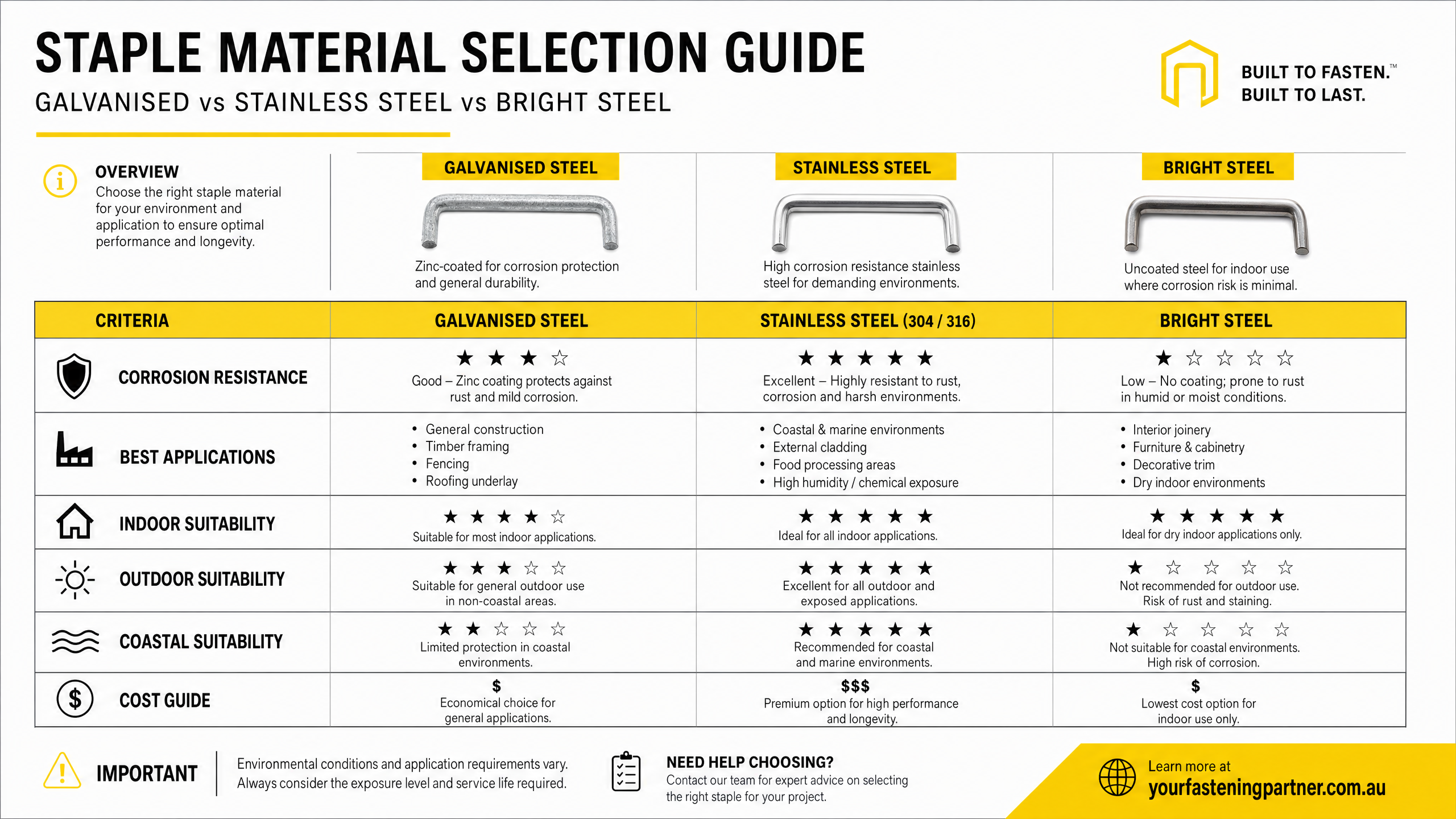
Choosing staples will partially depend on whether you need them for indoor or outdoor use, as different steel wire alloys react variably to moisture exposure. Here we compare galvanised vs stainless staples, which are two of the most popular staple types available:
- Galvanised steel staples – these use molten zinc coatings, which help to block oxidation from the atmosphere
- Stainless steel staples – these are higher grade and incorporate active chromium, which eliminates any oxidation
For these reasons, galvanised tends to be used more for indoor joinery and protected upholstery projects where moisture remains low. Whereas stainless steel is used in more demanding outdoor projects. Read on as we explore this topic in detail.
How environment and weather impact staple corrosion
Matching fixing materials to atmospheric exposure ensures long-term joint integrity. Standard galvanised wire suits sheltered indoor use, where atmospheric moisture levels remain low. However, projects exposed to constant weather changes require far stronger protection. Rainwater quickly dissolves protective zinc plating on standard wire.
In coastal locations or damp soil conditions, galvanised wire degrades and corrodes within months. Heavy moisture causes standard fasteners to expand, splitting fine wood and weakening timber frames. Installing grade 304 or 316 stainless fasteners provides total rust resistance, keeping outdoor timber structures solid despite severe weather exposure.
Galvanised vs stainless staples – a comparison chart
Comparing fixing specifications helps contractors choose correct wire fasteners for specific job site environments:
| # | Feature | Galvanised Steel | Stainless Steel |
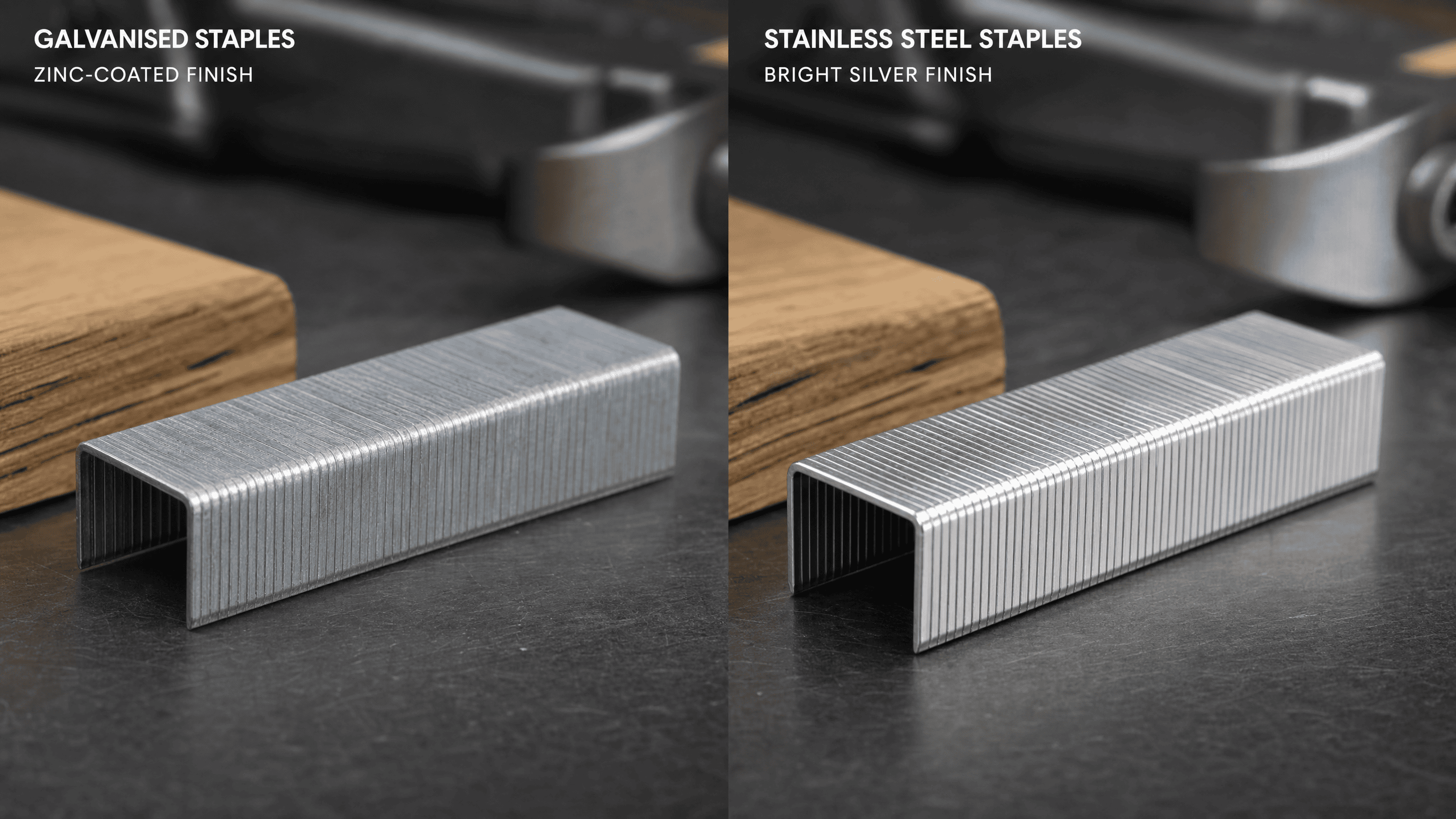
| 1. | Appearance | Bright silver finish initially, turning dull grey as oxidation occurs over time | Bright metallic sheen that retains a clean appearance without rust bleed |
| 2. | Best Applications | Internal joinery, dry site work, temporary fixings, and sheltered indoor projects | Marine joinery, severe weather exposure, external cladding, and heavy fencing |
| 3. | Coastal Suitability | Unsuitable for salt air as galvanised staples corrode faster in coastal conditions | Stainless steel staples are ideal for marine applications and coastal builds |
| 4. | Corrosion Resistance | Galvanised staples offer moderate protection against rust in dry indoor areas | Stainless steel staples resist rust naturally without additional coating layers |
| 5. | Cost | Galvanised staples are less expensive than stainless steel staples on site | Stainless steel staples justify their higher cost with longevity outdoors |
| 6. | Indoor Suitability | Highly suitable for dry internal joinery, timber framing, and subfloor fixing | Suitable for indoors, though generally reserved for high-moisture structural areas |
| 7. | Magnetic Properties | Highly magnetic due to standard carbon steel core composition | Non-magnetic or weakly magnetic depending on grade 304 or 316 alloy |
| 8. | Material Composition | Carbon mild steel core wire plated with a protective outer zinc layer | High-grade steel alloy containing high chromium content and nickel |
| 9. | Outdoor Suitability | Restricted to dry weather or short-term outdoor structural timber tasks | Durable fixings engineered for permanent exposure to rain and weather |
| 10. | Strength | High tensile strength ideal for general timber driving tasks | High shear strength and tensile capacity designed for severe structural loading |
| 11. | Timber Compatibility | Compatible with standard softwood timbers used in dry internal framework | Safe for all timbers, including acidic oak, cedar, and pressure-treated wood |
| 12. | Weather Resistance | The zinc coating on galvanised staples can wear away outdoors | Stainless steel staples provide superior long-term durability in harsh weather |
| 13. | Zinc Coating | Features a thin layer of electro-plated or hot-dipped protective zinc | Zinc-free alloy relying on internal chromium oxidation for total protection |
See the image below, which also provides information on this topic.
Which are the best staples for outdoor use?
Selecting the right staples for external joinery requires assessing long-term weather exposure and site moisture levels. Standard galvanised staples manage sheltered positions well, but exposed positions demand superior metal alloys. Grade 304 and Grade 316 stainless-steel wire fasteners provide full protection against severe rain, frost, and high humidity.
In stainless alloys, adding chromium forms an invisible, self-healing oxide film that shields internal iron from continuous atmospheric oxidation. What are stainless steel staples used for? Tradespeople specify them for long-term external timber structures like pergolas, garden buildings, and agricultural fencing.
Investing in high-grade stainless fasteners helps balance cost against long-term maintenance expenses. Selecting appropriate fixing grades stops metal degradation, ensuring heavy outdoor timber joints stay firm despite severe weather exposure.
Chemical compatibility with treated timber
Treated timber chemicals react aggressively with standard fasteners, making alloy selection vital for exterior builds. Copper-based timber preservatives eat through standard zinc coatings, leaving raw steel exposed to moisture. Using grade 304 or 316 stainless fixings prevents chemical corrosion in pressure-treated wood. Stainless wire resists chemical reactions, preserving clamp strength across all outdoor timber applications.
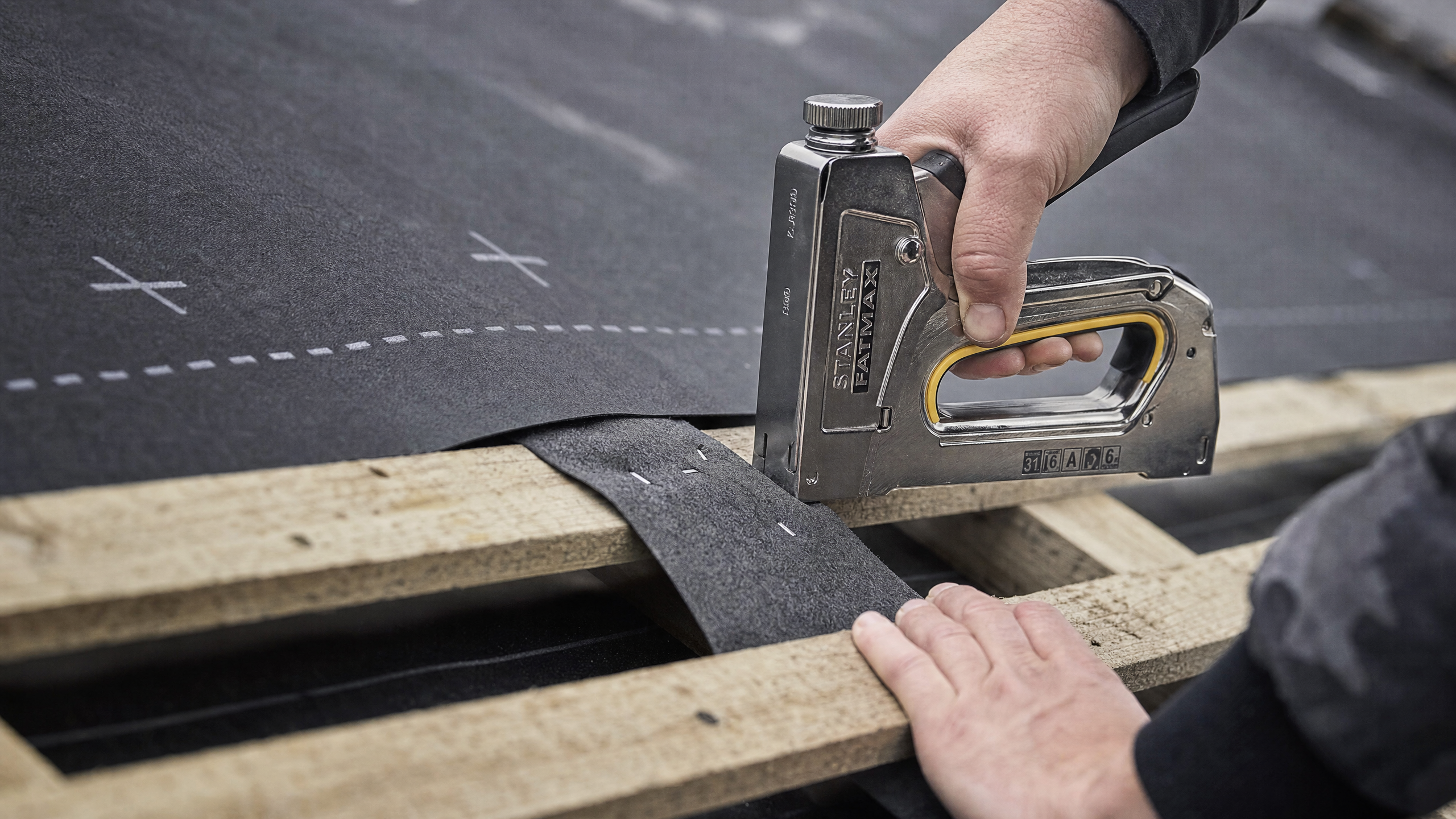
When to use galvanised staples
Here are some tips for when stainless staples will be the most appropriate to use:
- Budget-conscious jobs – pick zinc-plated wire to provide cost-effective staples on interior building work
- Covered workshop joinery – assemble interior shop fittings and display units inside dry environments
- Dry indoor projects – use galvanised staples for internal timber framework and dry joinery tasks
- General indoor fixing – apply zinc-plated fixings where weather exposure is not expected
- Low humidity locations – fasten internal plywood lining in rooms with minimal moisture exposure
- Short-term outdoor builds – secure temporary site hoarding and sheltered framing during dry weather
- Standard timber framing – drive zinc-coated wire into softwood studs for internal partitions
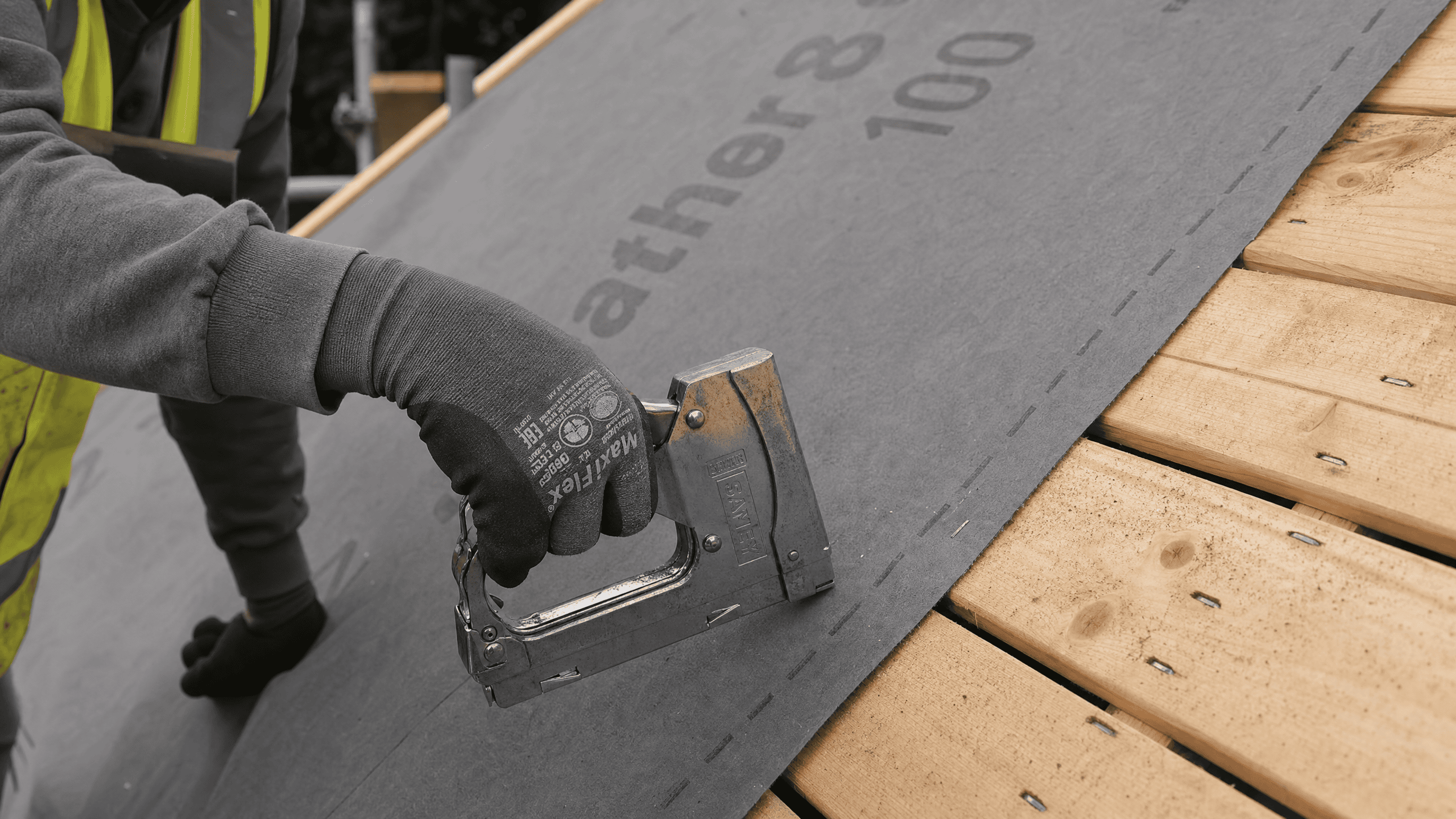
When to use stainless steel staples
Here are some tips for when stainless staples will be the most appropriate to use:
- Acidic wood species – fasten oak or cedar without risking dark tannin chemical stains
- Chemically treated timber – drive stainless steel staples into timber treated with preservative chemicals
- Exposed timber decking – anchor subfloor joists and exterior timber frames in damp conditions
- Long-term exterior cladding – maintain overall structural integrity across exposed external wall panels
- Marine and coastal builds – install grade 316 stainless staples for projects exposed to sea air
- Outdoor furniture assembly – secure timber joints on exterior benches exposed to heavy rain
- Permanent roofing tasks – secure sarking boards and counter battens against severe weather elements
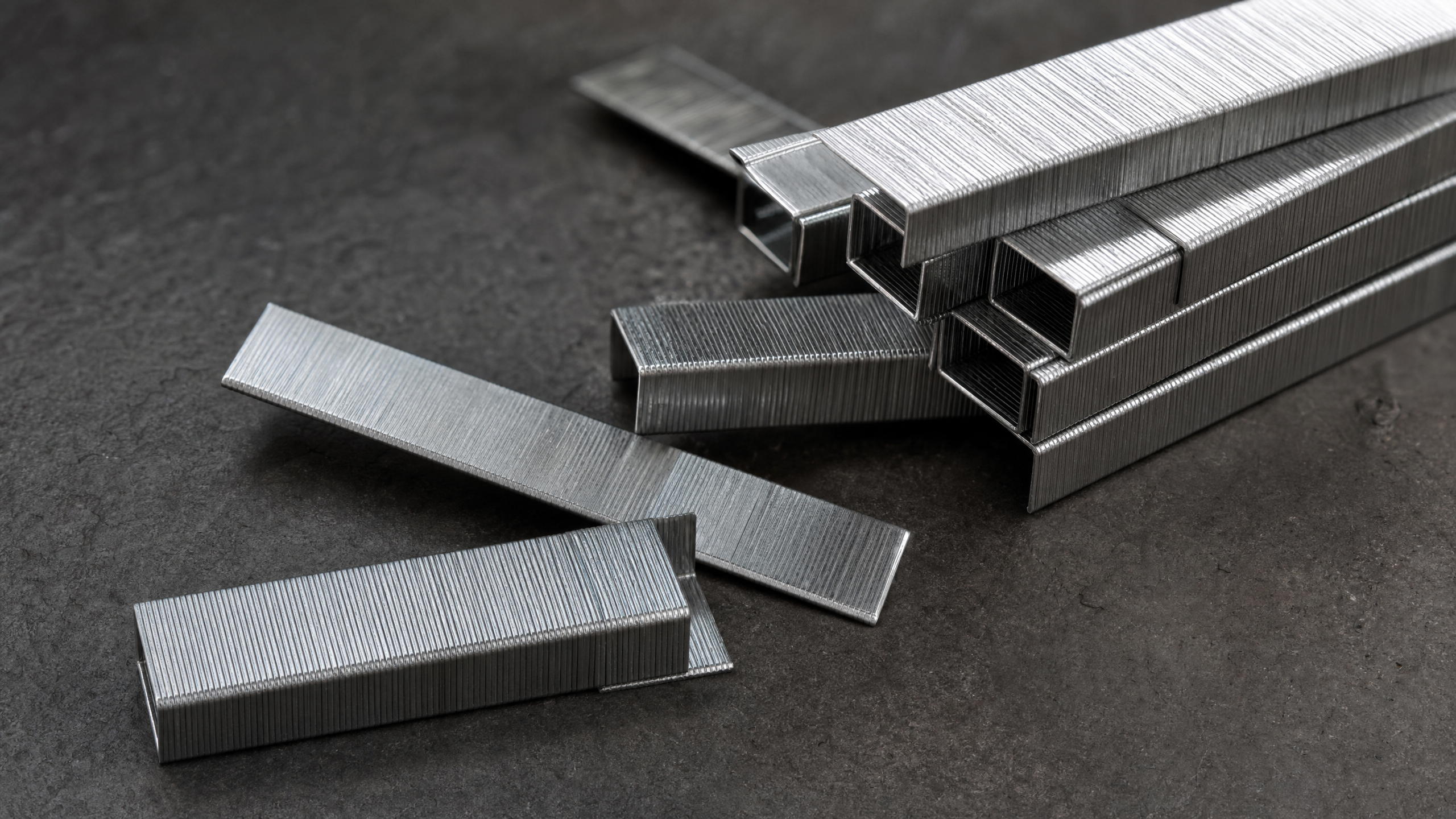
Marine and coastal applications – Why stainless steel is mandatory?
Coastal air carries high concentrations of airborne salt and moisture that attack standard steel fasteners rapidly. In marine environments, standard zinc coatings break down quickly, leaving raw steel exposed to severe atmospheric decay. Specifying stainless steel staples is mandatory for coastal construction to prevent rapid failure of fixings.
Grade 316 stainless wire fasteners resist aggressive pitting and chloride attack in these harsh environments. Using high-grade alloy fixings ensures your timber joints remain solid and secure. Stainless steel contains at least 10.5% chromium for rust resistance, making grade 316 the better choice for long-term marine structural integrity on your next project. They are also popular in industries like medical equipment and food processing for these corrosion-resistant qualities.
Contact information
We have all the staples you could need, including a range of staple sizes to meet varying requirements. Additionally, we have a large selection of quality industrial stapler tools to match.
Contact us in these ways:
- Phone – 0121 552 8400
- Emails – send these to sales@betcofasteners.com
- Contact us – complete our contact form page