
Best Nail Gun for Skirting Boards & Nails for Fixing Skirting Boards
On this page13 sections
Every carpenter knows that neat trim work relies on choosing the best nail gun for skirting boards. Leaving massive holes with a framing nail gun only adds hours of filling and sanding to your shift. Instead, a second fix brad nailer or a light finish nail gun is ideally suited for this task. Thicker gauge nails suit sturdy timber stud walls, whereas finer nails prevent modern MDF profiles from bubbling up. We compare cordless nail guns against traditional air tools to help you pick the quickest tool for the job.
Using a brad vs finish nailer for skirting boards
Trimming out a property requires the correct second fix system for a flush finish.
Brad nailers
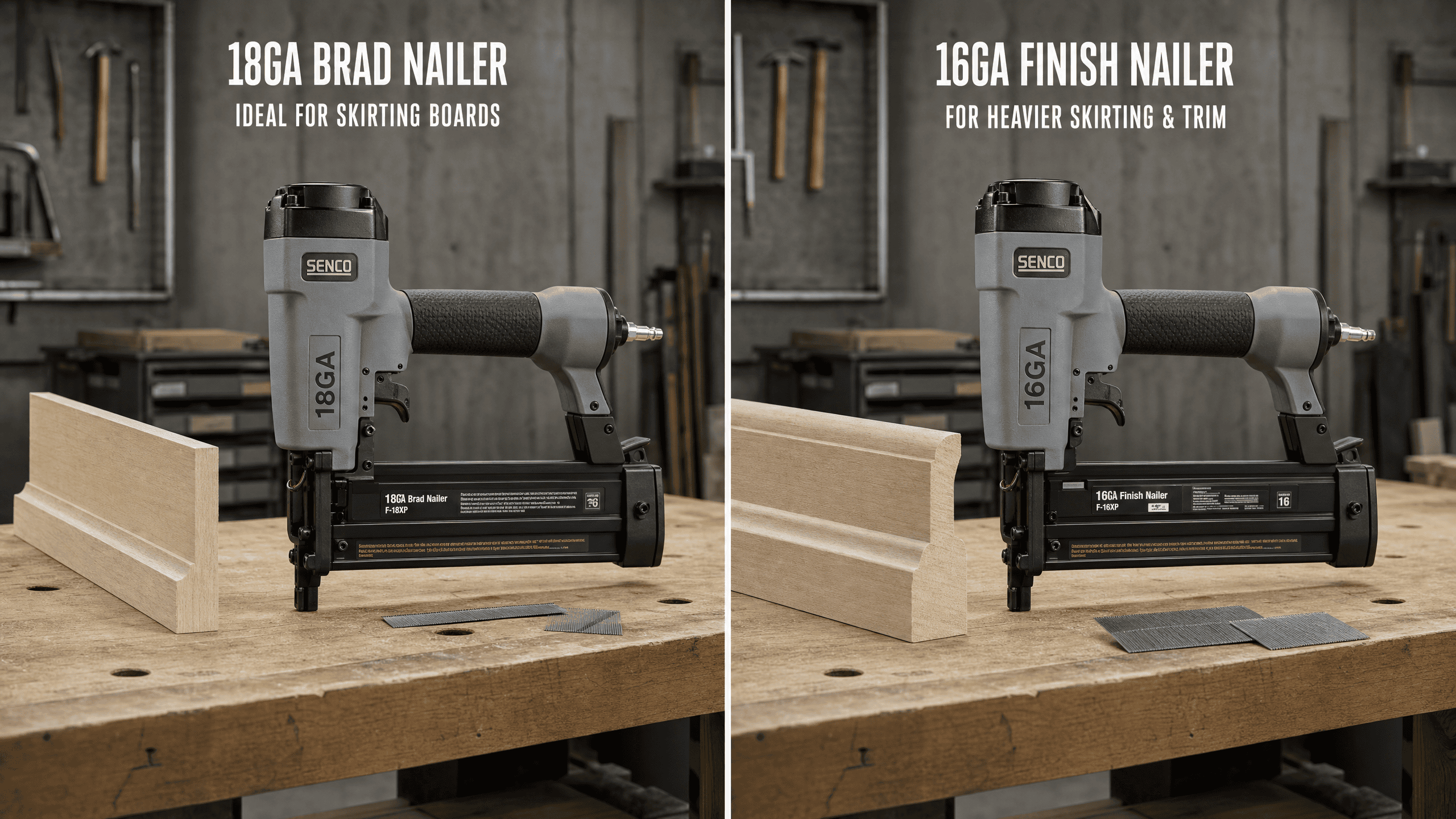
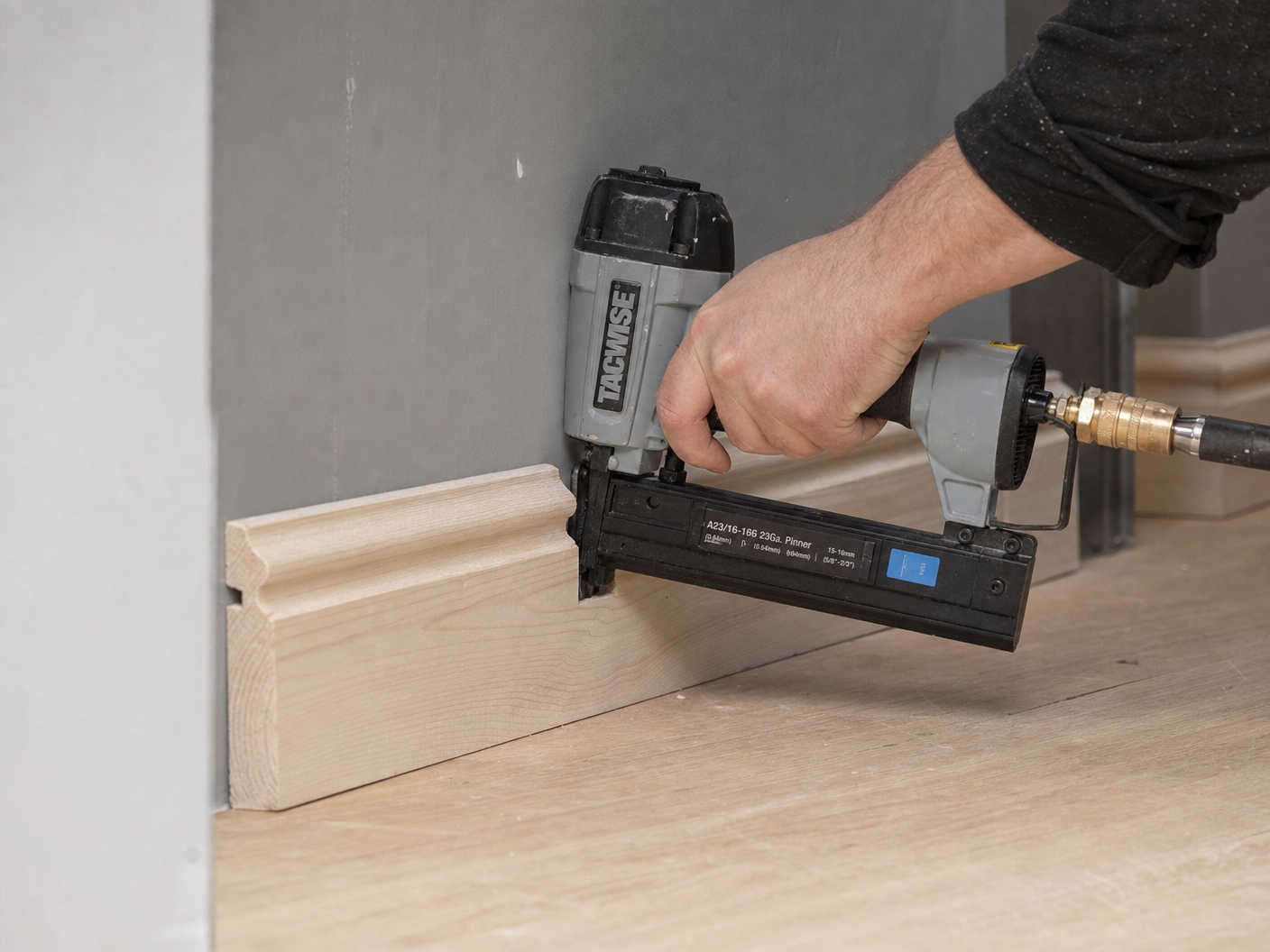
For delicate MDF trim, an 18 gauge tool is ideal. A brad nail gun fires thinner 18G brad nails that leave tiny holes. It provides the perfect balance of neatness and greater holding power for modern architraves and skirting boards. You will not bubble the face of the board or split the material. A brad nailer for skirting boards works beautifully alongside gap-filling glue on internal walls. These lighter nail guns reduce arm fatigue during long shifts on site. Also available are 21G mini brad nailers, which drive the even thinner 21G mini brad nails.
Finish nailers
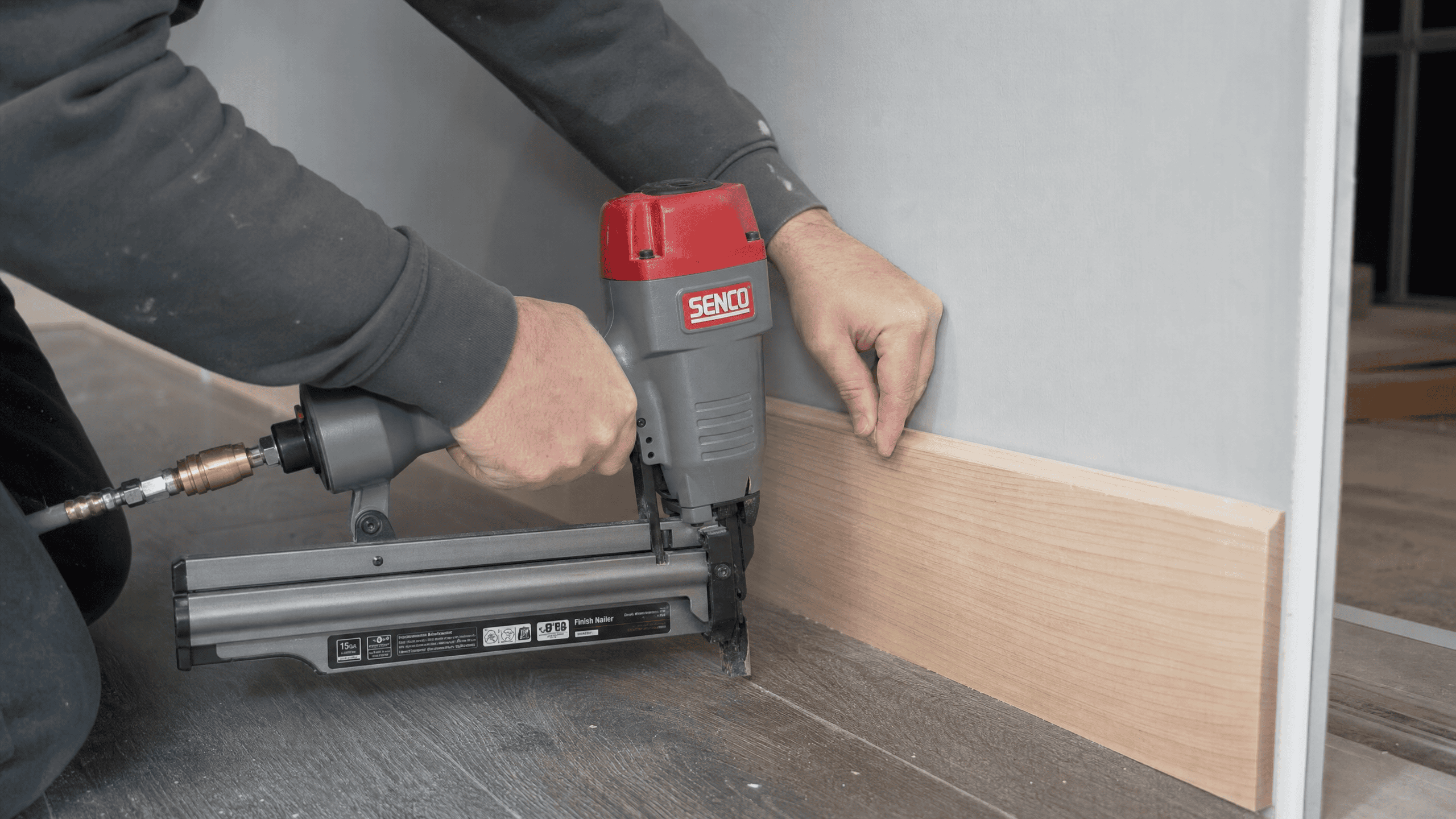
Thicker timber sections require the robust performance of a resolute 16-gauge tool. 16G finish nailers are perfect for substantial renovations and complex DIY projects. They fire larger finish nails that bite deeply into timber framing behind the plaster. The built-in depth adjustment wheel helps you set every head perfectly below the wood surface. They guarantee permanent stability for your skirting boards.
Choosing your power source
Selecting the best nail gun for skirting boards depends entirely on your specific site environment. Whichever type you buy, a no-mar tip protects the skirting board from damage during installation.
Pneumatic models
Hooking your tool to a pancake air compressor provides dependable, high-velocity performance. This configuration delivers more holding power when fixing wide profiles to internal stud work. The lightweight chassis helps you maintain accurate results during long shifts. These setups rarely suffer from major nail jams on the job. They are perfect for driving nails into solid timber frames, with pneumatic nail guns often being preferred for professional (trade) skirting board installations.
Cordless models
Battery power offers unmatched portability when installing modern MDF or softwood skirting boards. Cordless nail guns tend to be more expensive than corded electric models. You can fire nails instantly without waiting for a tank to pressurise. These tools are ideal for running long sections of dado rails and baseboards. They streamline efficient fastening because you are not restricted by power cables or need an air hose or compressor. Most premium kits include integrated safety features to protect the user.
Electric models
Mains-powered electric nail guns offer a continuous power supply for small internal fixing jobs. They represent an affordable option for simple residential woodworking projects. They work well when shooting thinner nails into softwood timber skirting. Always ensure you wear PPE when operating any mechanical fastening equipment. They provide a simple solution for straightforward interior renovations.
Working with different skirting board profiles
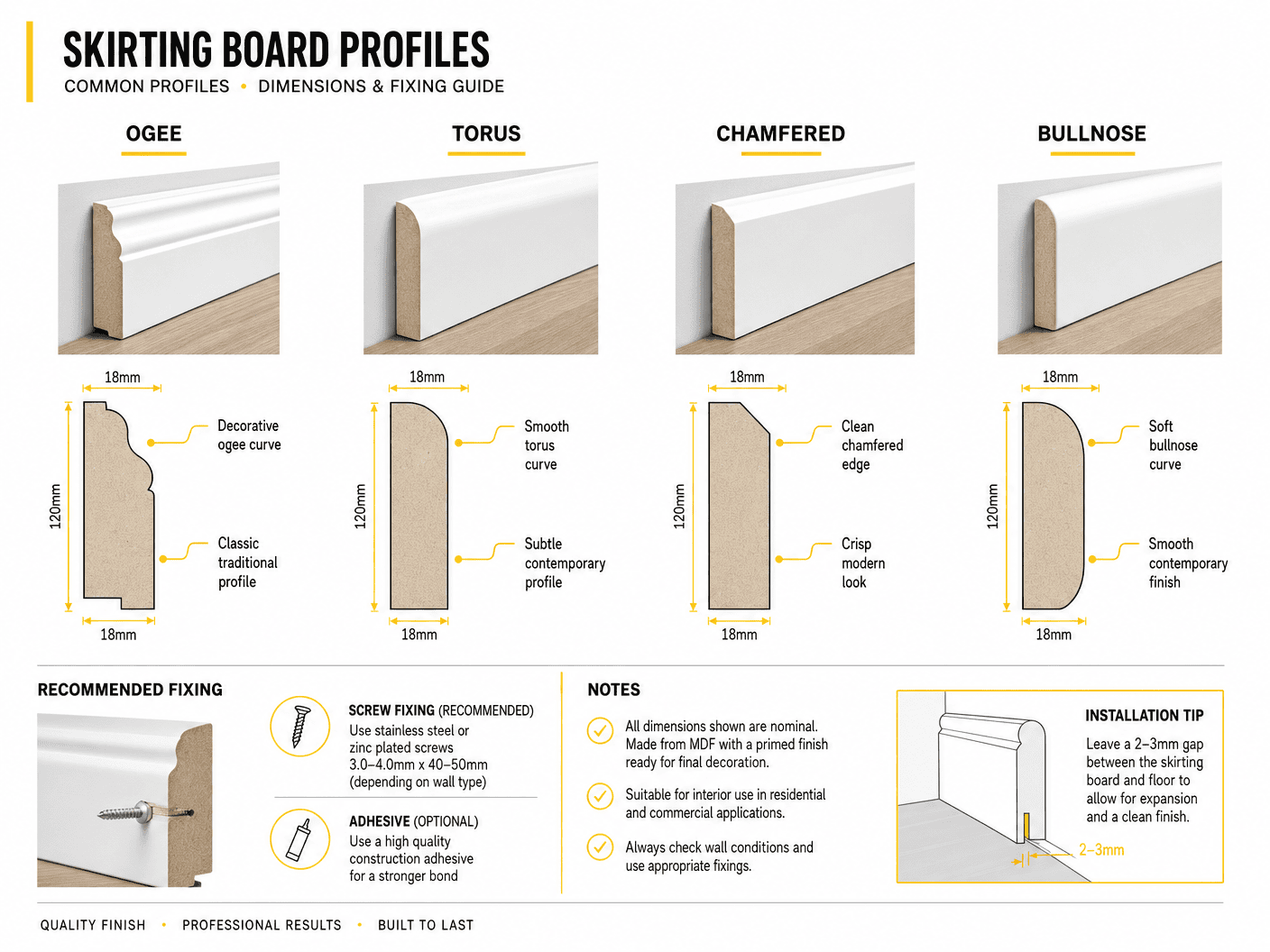
Selecting the correct skirting board nails is vital for high-quality domestic fitouts. Carpenters require reliable nails for fixing skirting boards to achieve a flush finish. Using a second fix nailer gun speeds up high-volume construction jobs. Modern tools include crucial safety features to protect the carpenter:
| Profile Variation | Geometry specifications | Site installation guidelines |
| Ogee moulding | This profile features a traditional decorative ogee curve. The nominal dimensions measure 18″ mm thick by 120 mm high | Fixings must penetrate the rear timber frame securely. A dedicated brad nailer for skirting boards prevents surface splitting |
| Torus moulding | This board shows a smooth torus curve. It is pre-primed and ready for final decoration on site | When fixing skirting to plasterboard, ensure you hit the underlying timber studs. Alternatively, apply a high-quality construction adhesive |
| Chamfered moulding | This moulding provides a clean chamfered edge. It delivers a crisp modern look across contemporary rooms | The guide recommends using 30″ mm to 40″ mm screws. Driving thinner nails or brads can prevent face puckering |
| Bullnose moulding | This trim presents a soft bullnose curve. It provides a smooth contemporary finish near internal door frames | Always check wall conditions before choosing your fasteners. Adding more skirting board nails near corners helps close awkward gaps |
Tips for the placement of skirting board nails
Use your nailer to fire nails into the skirting board as seen in the image below:
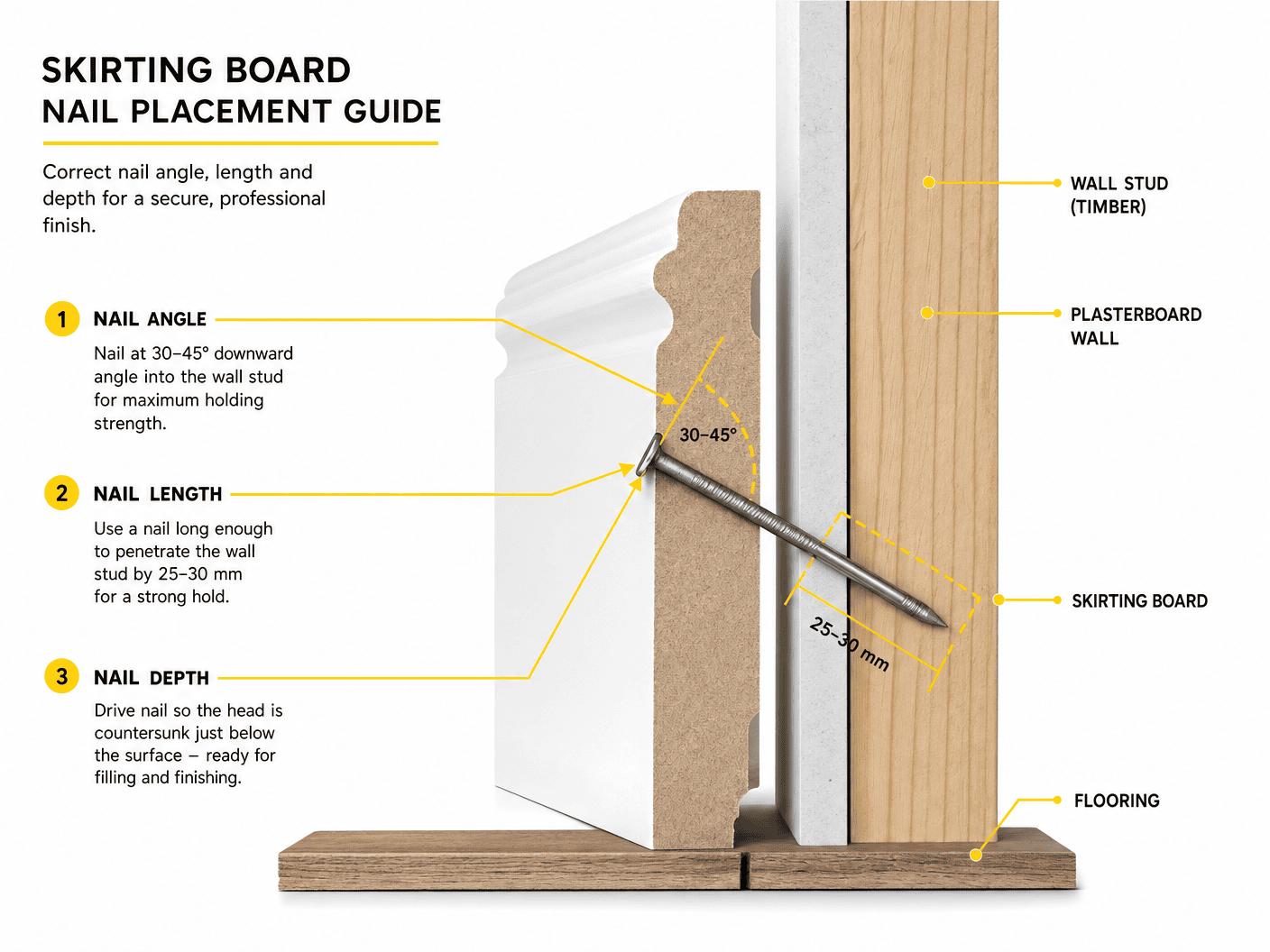
- Nail angle – fire the pin downwards at a strict 30° to 45° angle. This angled placement delivers maximum holding strength in the timber
- Nail length – ensure the skirting board nails penetrate the internal timber frame as seen in the diagram below. This deep penetration creates more holding power to prevent pulling.
- Nail depth – drive the nail head so it sits countersunk just below the surface. This leaves the profile completely ready for rapid filling and final finishing tasks
Skirting board nail size guidelines
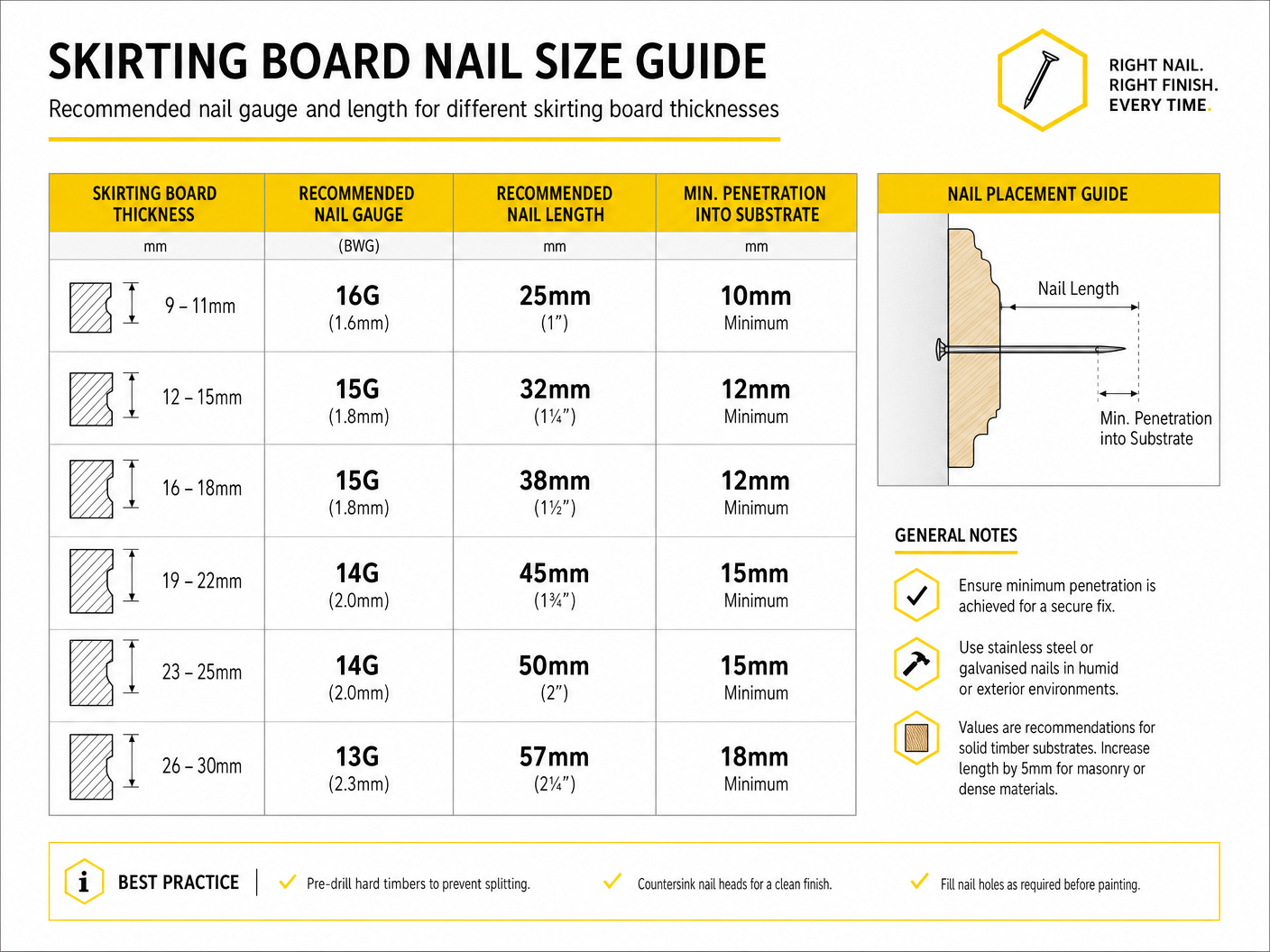
The skirting board nail size guide image below provides recommended nail gauges, lengths, and minimum substrate penetration depths for various board thicknesses. For instance, a thickness of 9 to 11mm requires a 16G gauge and a 25mm length. As board thickness increases up to 30mm, the required gauge scales down to 13G and length increases to 57mm. Additional guidance notes recommend using stainless steel or galvanised nails in humid environments, pre-drilling hard timbers, and ensuring proper penetration.
Would only second fix nail gun types be used on skirting boards?
No, second fix nail guns are not the only method used to install skirting boards on site. While they are the only appropriate nail gun type, alternative fixing methods are incredibly common across the trade.
For example, many carpenters prefer using heavy-duty grip adhesives combined with traditional screws and rawl plugs for maximum security. If you are fixing directly into dense concrete blockwork, hand-hammered masonry nails are often required instead. Using a heavy first fix framing gun would simply shatter the decorative timber or leave massive, ugly craters.
Conclusion – What is the best nail gun for skirting boards?
There are many types of nail guns, but the ones specifically designed for delicate materials like skirting boards and trims are second fix models. Which one is best? Well, this varies and depends upon your own circumstances.
Look for 18G brad nailers or 21G mini brad nailers; these do not require the high power of 1st fix nailers (like a framing nailer) but will still nail through tough materials. Investigate the nail gun magazine capacity, as this affects how often you reload.
Remember, comfort is important; you may be using these for extended periods, so consider whether to buy an air, electric, or cordless model with care. You may also want a nailer that can nail through a brick wall or hardwood floors, so research your options.
Contact us
When you buy the right nail gun, whether as a DIY enthusiast or a tradesperson, you are on your way to professional-looking skirting boards. Why not speak to our friendly team about our different nail guns and nails for fixing skirting boards? We can advise on the key features to look for and how to prevent accidental firing.
Contact methods are:
- By phone – 0121 552 8400
- By email – send to sales@betcofasteners.com
- Contact form – our contact us page allows you to complete this online