
What Is a First Fix Nail Gun? First Fix Nails Explained – 1st Fix vs 2nd Fix Nail Guns Compared
On this page10 sections
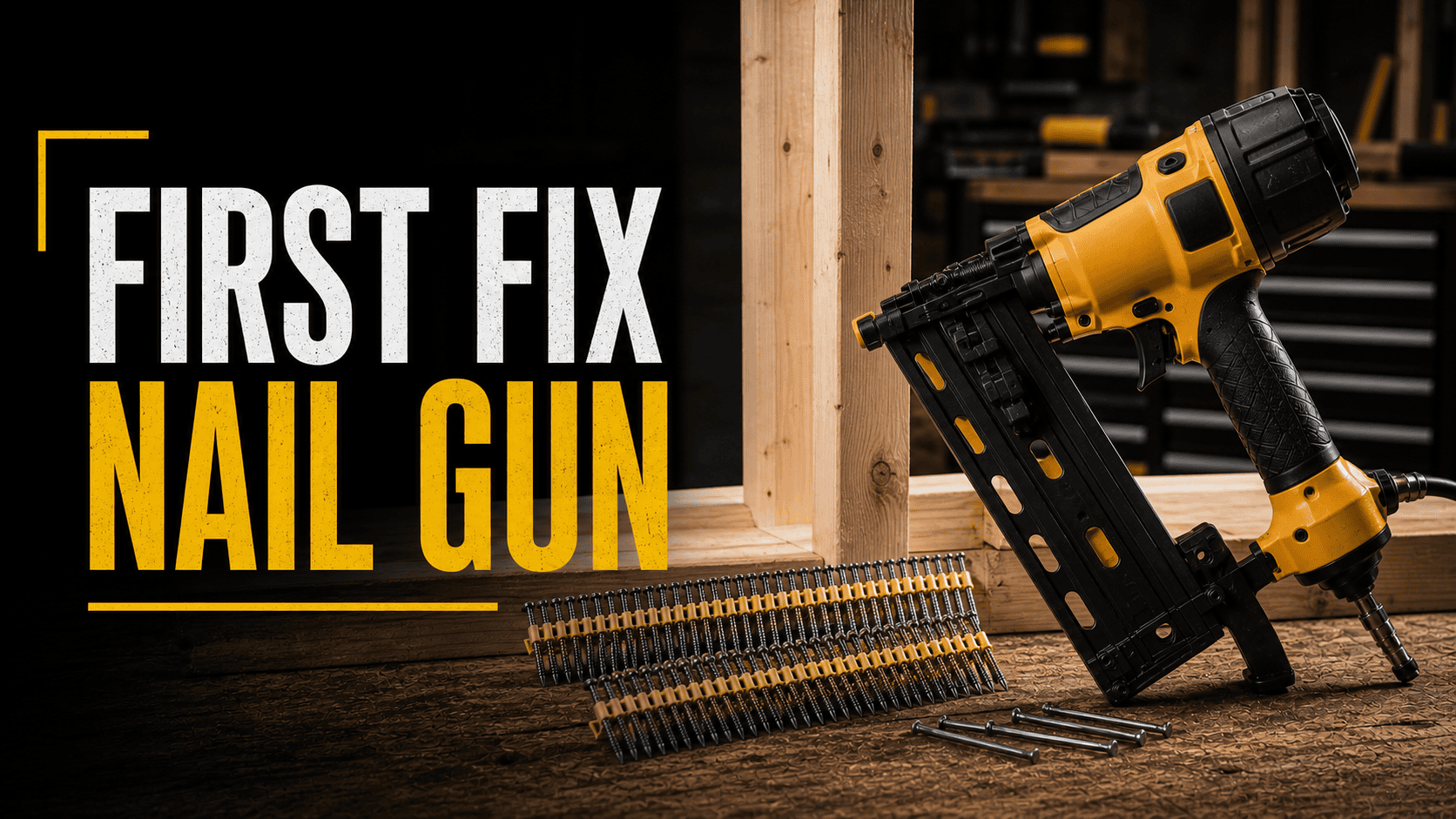
A first fix nail gun is a wonderful addition to a tool set, particularly in carpentry and construction industries. For heavy-duty nailing, typical applications include timber framing, roof trusses, and decking.
In this article, we explore “What is a first fix nail gun?” and explain the first fix nails you will need to use. We also provide a comparison table, “1st fix vs 2nd fix nail gun features”. So, read on and learn more about this invaluable nailing tool.
What is a first fix nail gun?
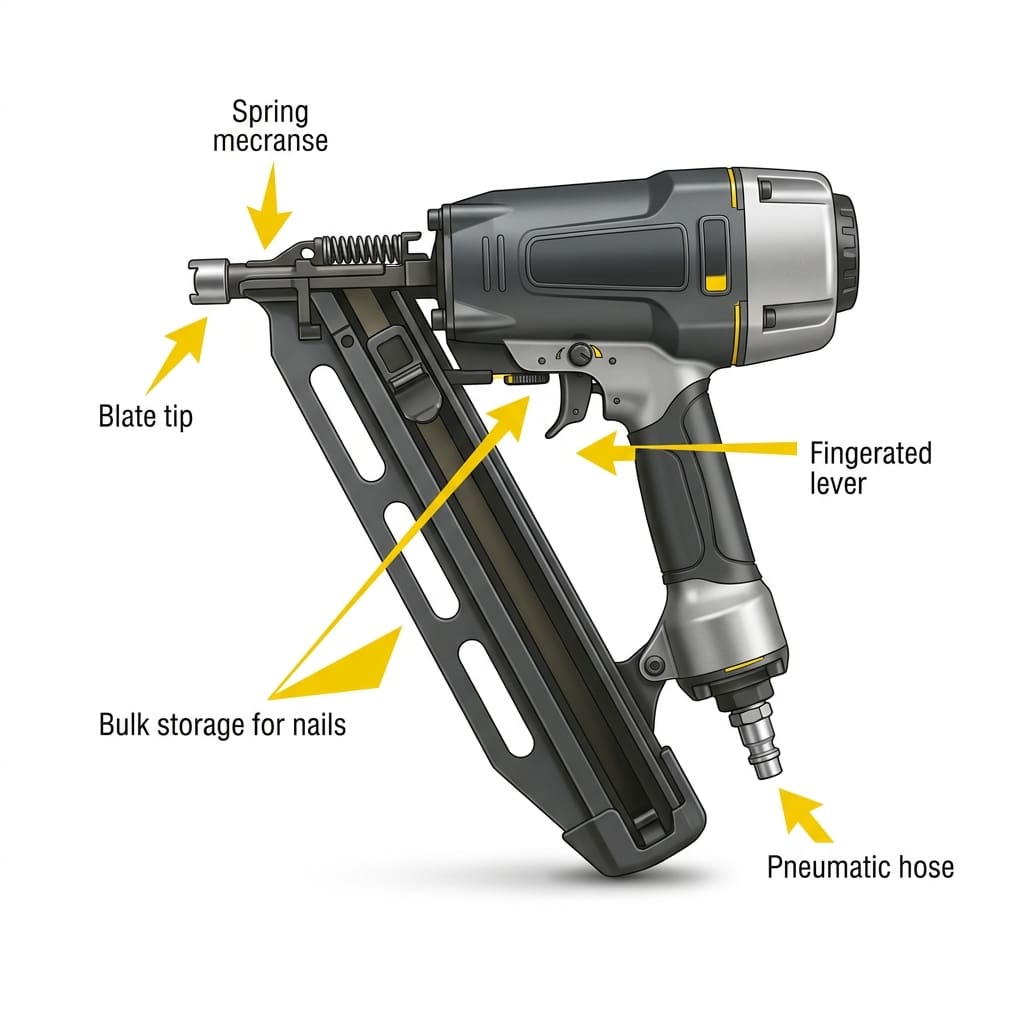
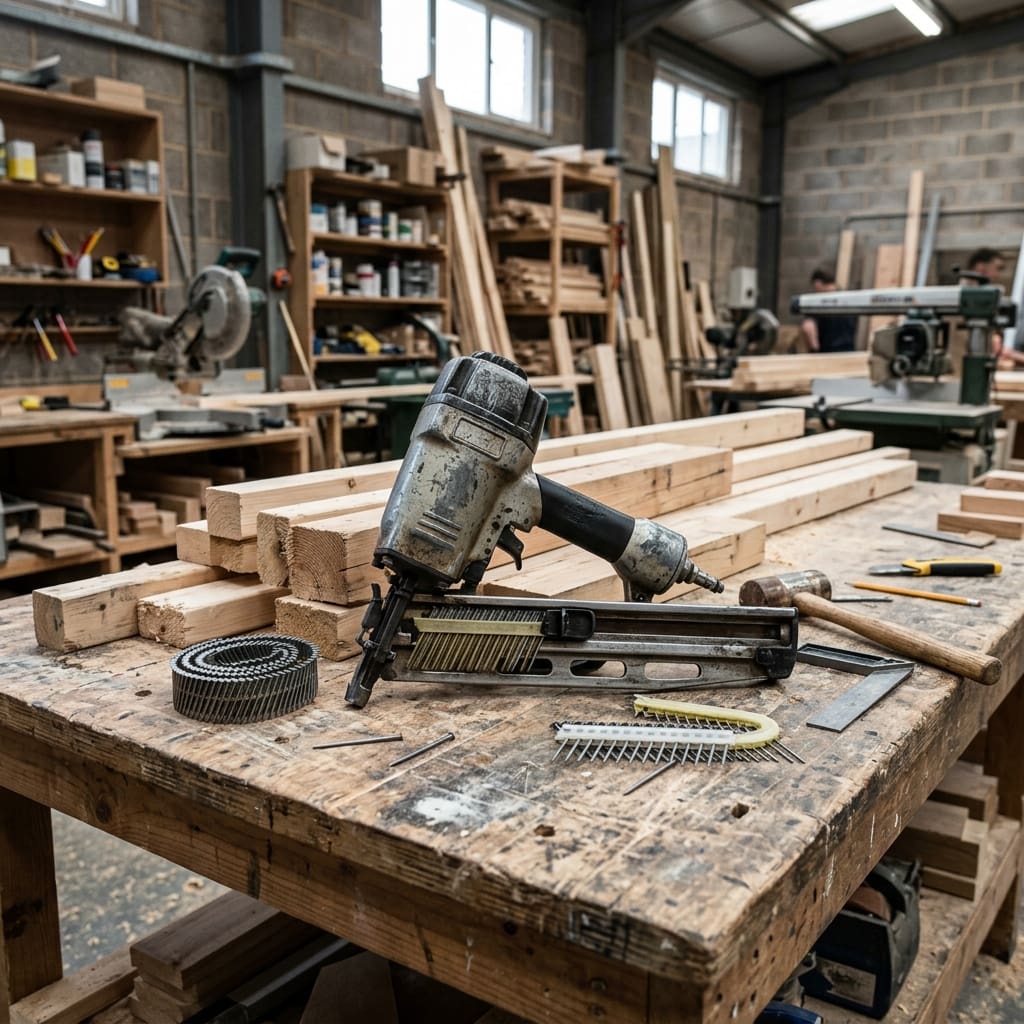
A heavy-duty framing nail gun drives heavy fasteners into structural timber during the initial phase of building works. Operating via gas canisters, a battery-powered nail gun, or a traditional air compressor, it punches larger nails deep into dense wood. This first fix nailer handles structural carcass assembly, floor joist placement, and stud walls safely.
To achieve this, the tool fires heavy structural fasteners efficiently from a distinctively angled magazine tray. An aggressive spiked nose probe bites into the timber to prevent the tool from slipping when firing at difficult angles. This heavy-impact structural process prioritises speed and holding strength over aesthetics. Consequently, it leaves deep surface indentations and visible nail heads that are later completely hidden by internal plasterboard or floor sheets.
What are first fix nails?
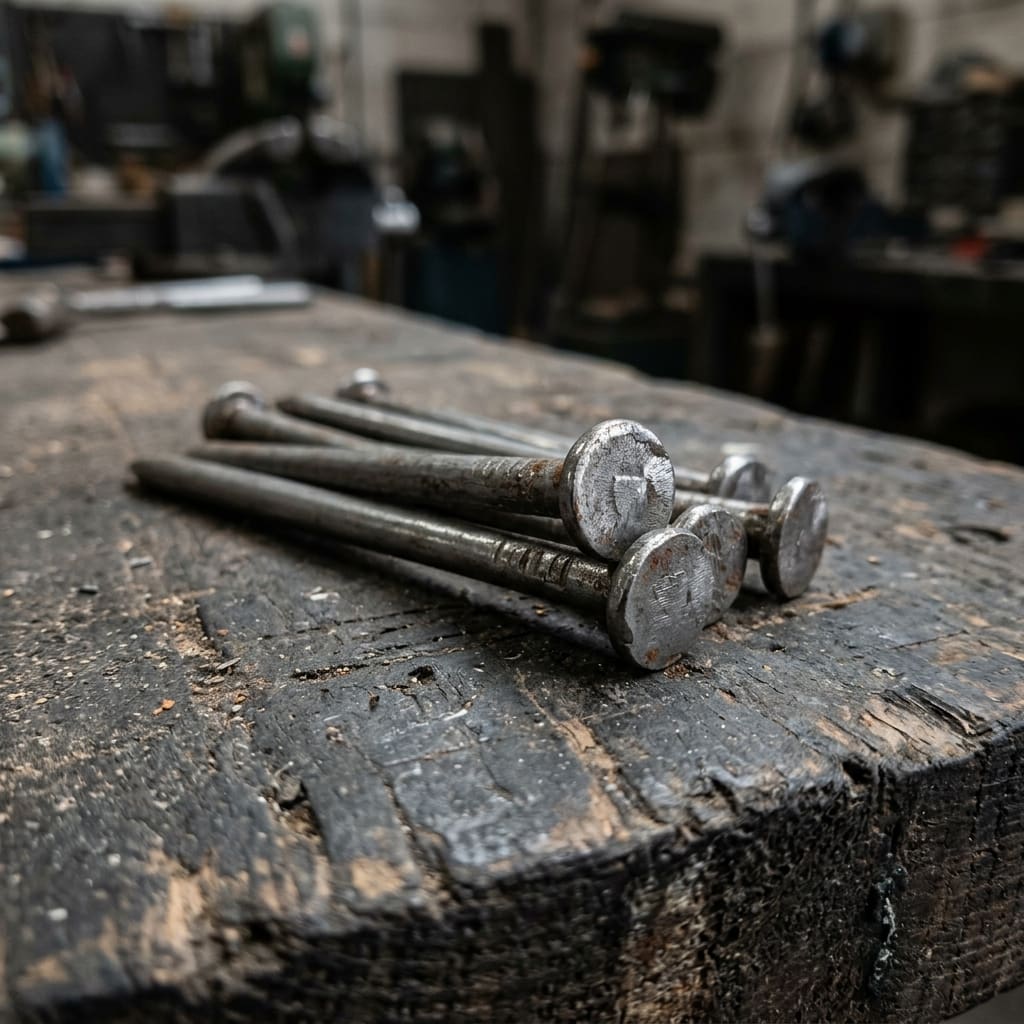
These thick, heavy-gauge steel collated nails feature ringed or smooth shanks to provide extreme structural holding power across joints. These heavy first fix nails are visible initially but are usually covered over completely during later internal construction stages. They range up to ninety millimetres in length to grip structural timber frames tightly under immense load stress.
Depending on the specific site environment, they come with plain smooth shanks, high-torque screw shanks, or high-security ring-shank nails. These fasteners come as raw bright steel for dry internal frames, or weather-resistant galvanised and stainless steel variations for exposed external structures. The heavy wire shafts have standard diameters of between 2.8mm and 3.1mm to provide excellent resistance against structural shear forces. They are held together securely using paper tape or plastic strip collation to match the exact angle of the tool magazine.
First fix vs second fix explained
Understanding the distinct building stages helps you deploy the correct commercial nailing equipment across your carpentry contracts.
About first fix
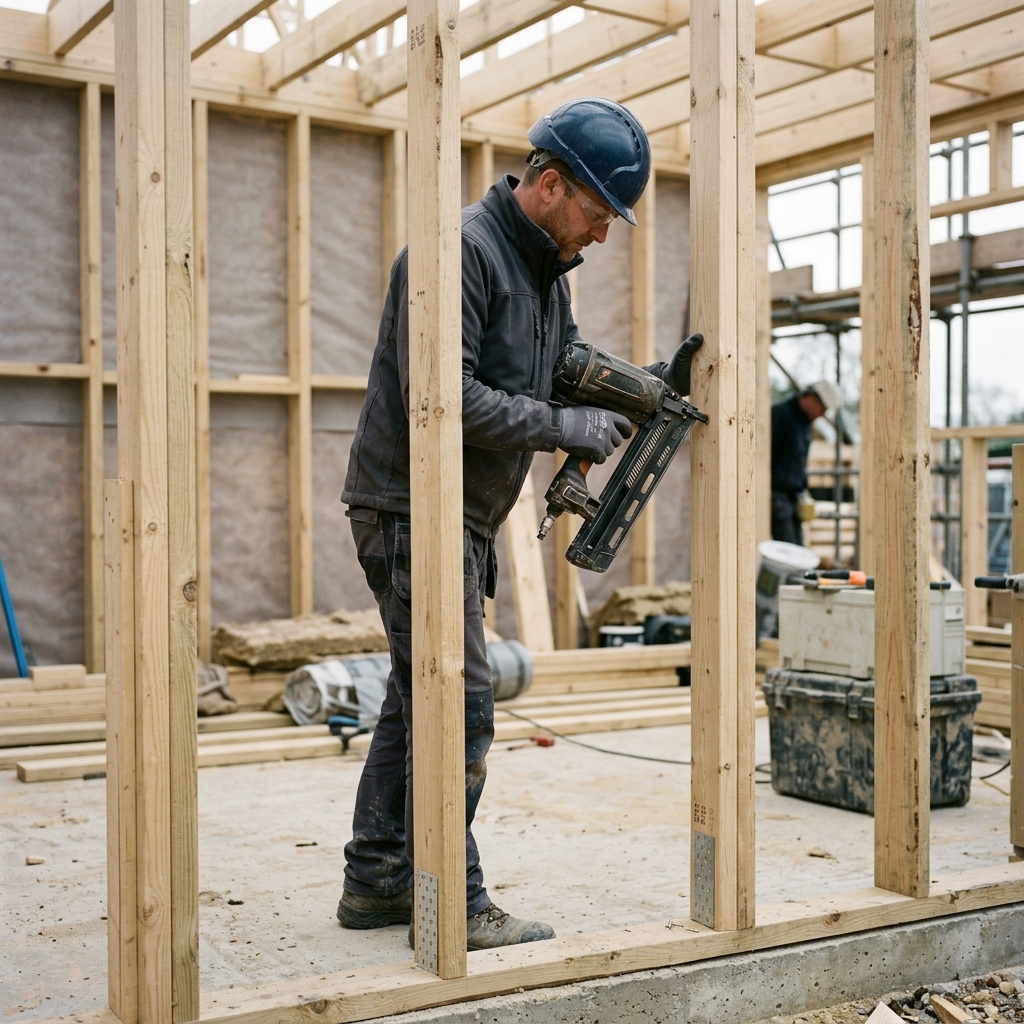
A heavy structural framing nailer punches thick fasteners deep into hidden timber carcasses. These powerful tools run via gas cells or an air hose to complete rough woodwork efficiently. They tackle structural stud work, heavy roof trusses, and subflooring installations where structural security matters more than appearance. First fix nail guns use larger nails than second fix nail guns. First fix nailers are not suitable for precision tasks or visible finish work.
About second fix
Secondary finish work requires finish, pin and brad nailers to secure visual trim elements without splitting the wood. These finishing tools use much thinner nails for tasks such as securing decorative architraves around door frames and down skirting boards. They deliver a seamless, flush surface finish that is ready for immediate painting.
The structural difference:
The primary difference centres on the gauge of the fastener and the structural load requirements. Comparing a 1st fix vs 2nd fix nail gun shows that each handles separate installation phases on site. Swapping between these different nail guns ensures your structural frames remain solid and your final trims look immaculate.
Popular first fit applications
The following are some of the most popular applications for first fix nail guns:
- Concrete formwork – build temporary heavy timber shuttering boxes rapidly on site to hold wet poured concrete mixes perfectly in place
- Decking construction – assemble the hidden, load-bearing subfloor timber frames that support heavy exterior garden platform layouts before fixing floorboards
- Floor joist installation – fix structural floor timbers directly into joist hangers using high-impact force to create solid load-bearing upper floor levels
- Garden buildings & sheds – construct rigid timber carcasses for structural workshops, large summerhouses, and domestic garden storage buildings to last long periods
- Heavy fencing frameworks – drive heavy ring-shank fasteners directly into dense agricultural timber posts to secure long-lasting commercial boundary lines
- Hoarding site construction – secure robust ply panels onto heavy timber posts to protect the public’s safety around active commercial construction jobs
- Roof truss & battening – secure structural engineered roof rafters and external slate tiling laths down to structural roof frameworks at different angles
- Structural timber framing – execute high-speed timber frame erection phases on new build housing sites using hard-wearing, powerful industrial structural tools
- Stud wall framing – frame out internal structural partition walls cleanly by firing heavy structural nails through structural head and sole plates
- Subfloor sheet decking – fix thick structural floor sheets down onto joists firmly to build a solid base for future internal finish work
- Timber cladding – secure thick structural external timber boards to structural walls to insulate buildings and protect internal spaces from heavy rain
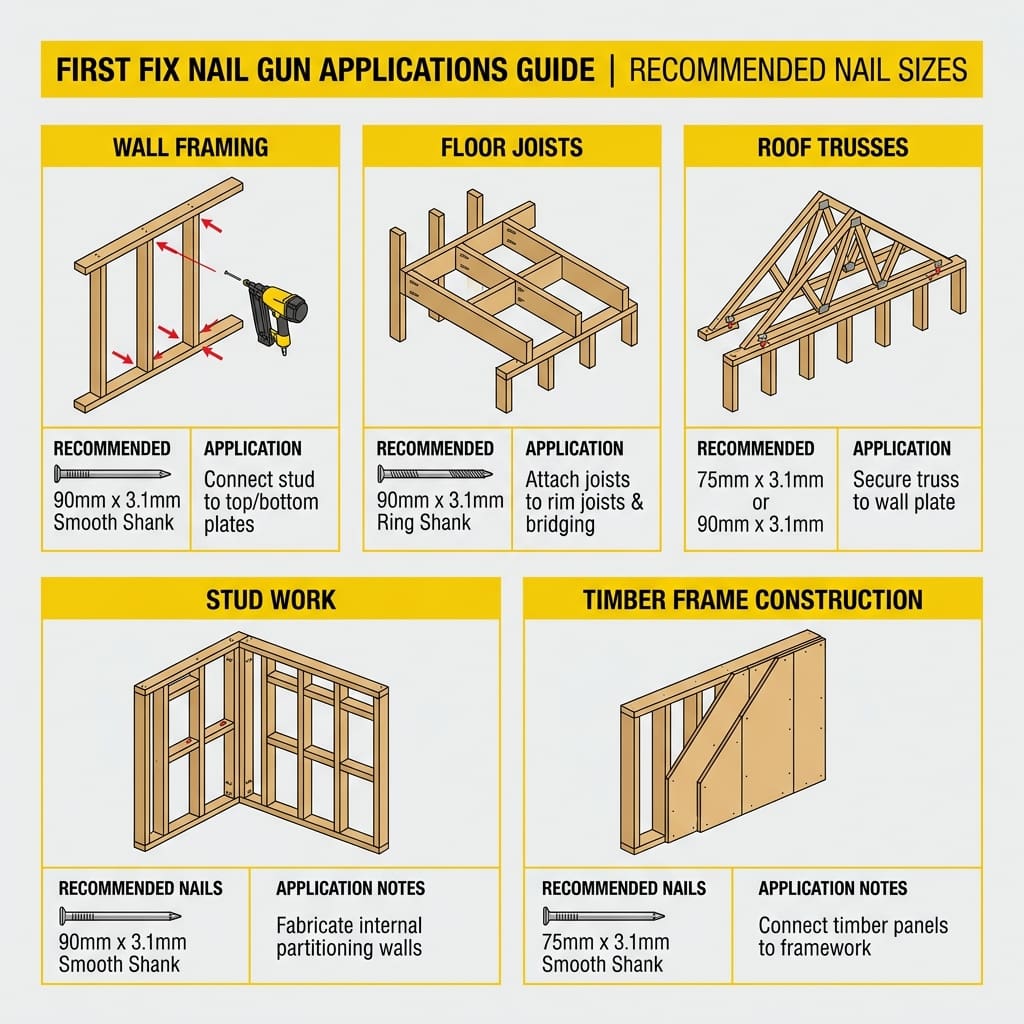
Table – When to choose a 1st fix vs 2nd fix nail gun
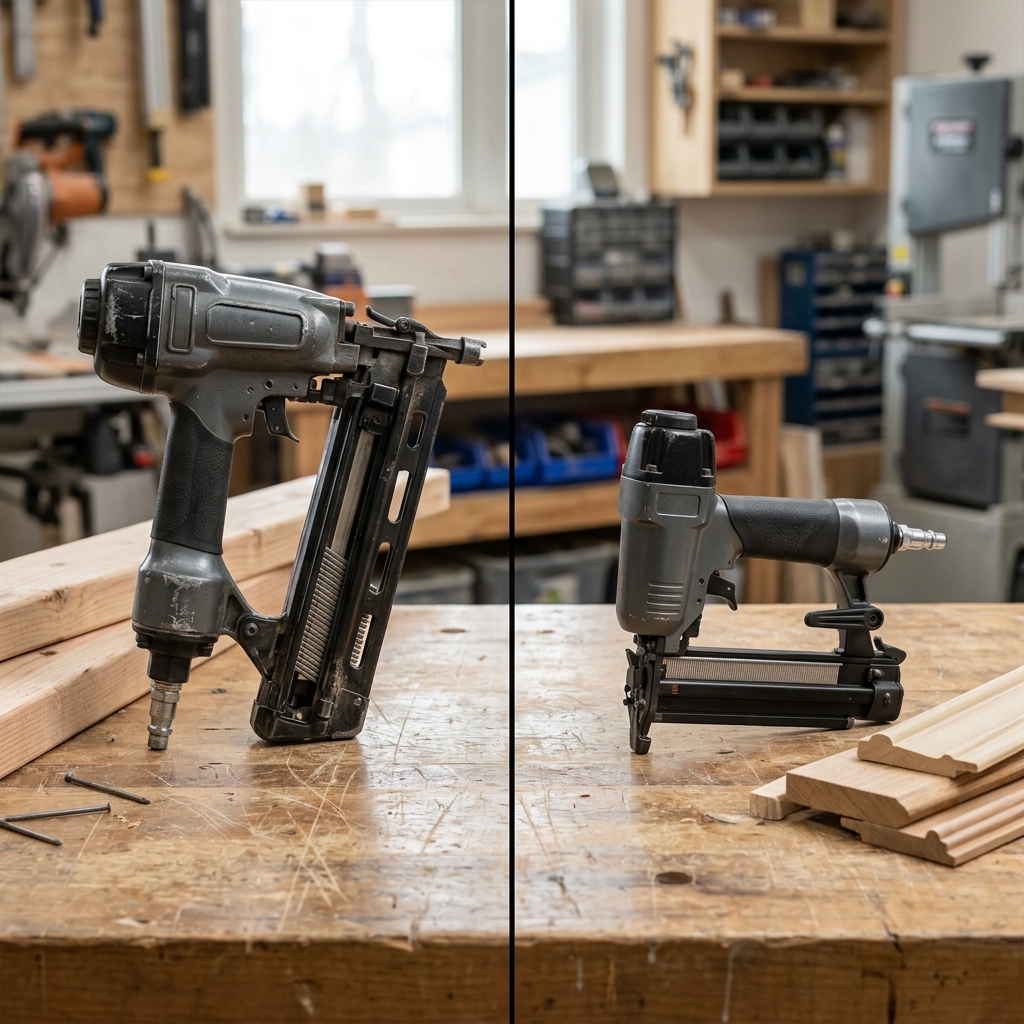
The table below compares 1st fix and 2nd fix capability across eight popular features:
| # | Feature | 1st Fix | 2nd Fix |
| 1 | Primary site application | Structural skeletons and heavy roofing | Internal joinery trim and building furniture |
| 2 | Fastener type used | Thick clipped or round head framing nails | Thin, headless or small T-head brad nails |
| 3 | Structural holding power | Exceptionally high grip to hold tough materials | Low structural hold meant for lightweight timber |
| 4 | Finished surface appearance | Leaves visible heads and slight timber indentation | Leaves a neat, vastly cleaner finish on wood |
| 5 | Wood splitting risk | High risk near edges of fine timber | Extremely low risk on highly delicate materials |
| 6 | Common tool angle | Angled magazines to reach into tight spaces | Available in both angled and straight magazines |
| 7 | Tool chassis weight | Heavier build designed to absorb high pressure | Lightweight body that is easy to carry |
| 8 | Depth setting method | Mechanical nose adjustment to drive nails deep | Dial controls for precise depth adjustment work |
Conclusion
Choosing the right tools for your structural build requires knowing when to put down your lightweight staple gun and pick up a heavy framing tool. We explained above “What is a first fix nail gun?” and “What are first fix nails?” so this should help you in choosing a nailer. Armed with the correct power source, a heavy-duty first fix nail gun makes fast work of several types of structural framing. Always remember to wear PPE on site before pulling the trigger on these high-pressure machines. Your choice between a 1st fix vs 2nd fix nail gun depends entirely on the structural load and final visibility of the woodwork.
Contact us
Whether you are a trade professional or a DIY enthusiast, buying the right nail gun is an important decision in carpentry work. Buying a first fix gun is entirely different to buying one of our finishing nailers. Both fire nails, but at different stages of a trade or DIY project. For further advice, why not contact us?
Contact methods are:
- By phone – 0121 552 8400
- By email – send to sales@betcofasteners.com
- Contact form – our contact us page allows you to complete this online