
Types of Nail Guns & Nailers Explained: Nailer Sizes, Uses & What You Need
On this page13 sections
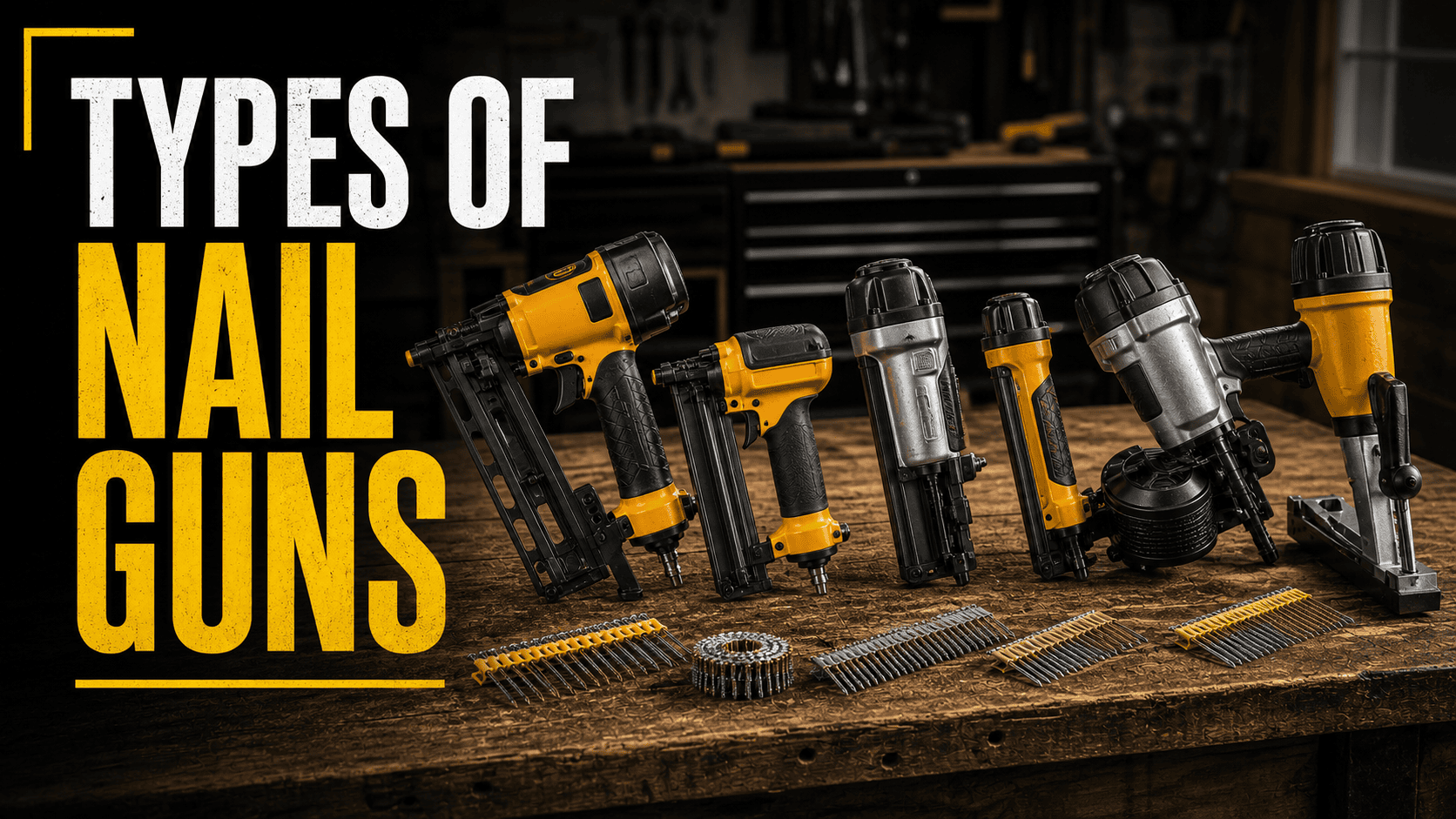
Whether you are looking to buy a battery-powered nail gun, an electric-powered one or one of our cordless nail guns, it is valuable to understand the different types of nail guns which are available, with nail guns explained right here. Most nailers are great for carpentry jobs, but there are specialist versions which fire the perfect gauge nails for your needs. After all, a heavy joist needs a different solution than nailing a delicate picture frame. Read on as we explore everything you need to know.
What is a nailer?
Understanding the different types of nail guns helps keep your building work efficient and highly secure. These power tools drive collated nails safely into timber, running either as a cordless model or via an air hose. Common uses vary from securing heavy structural framing nails to fixing slim skirting boards. Matching the best nail gun to the correct nail type prevents messy surface damage and stops you from using the wrong type of fixing.
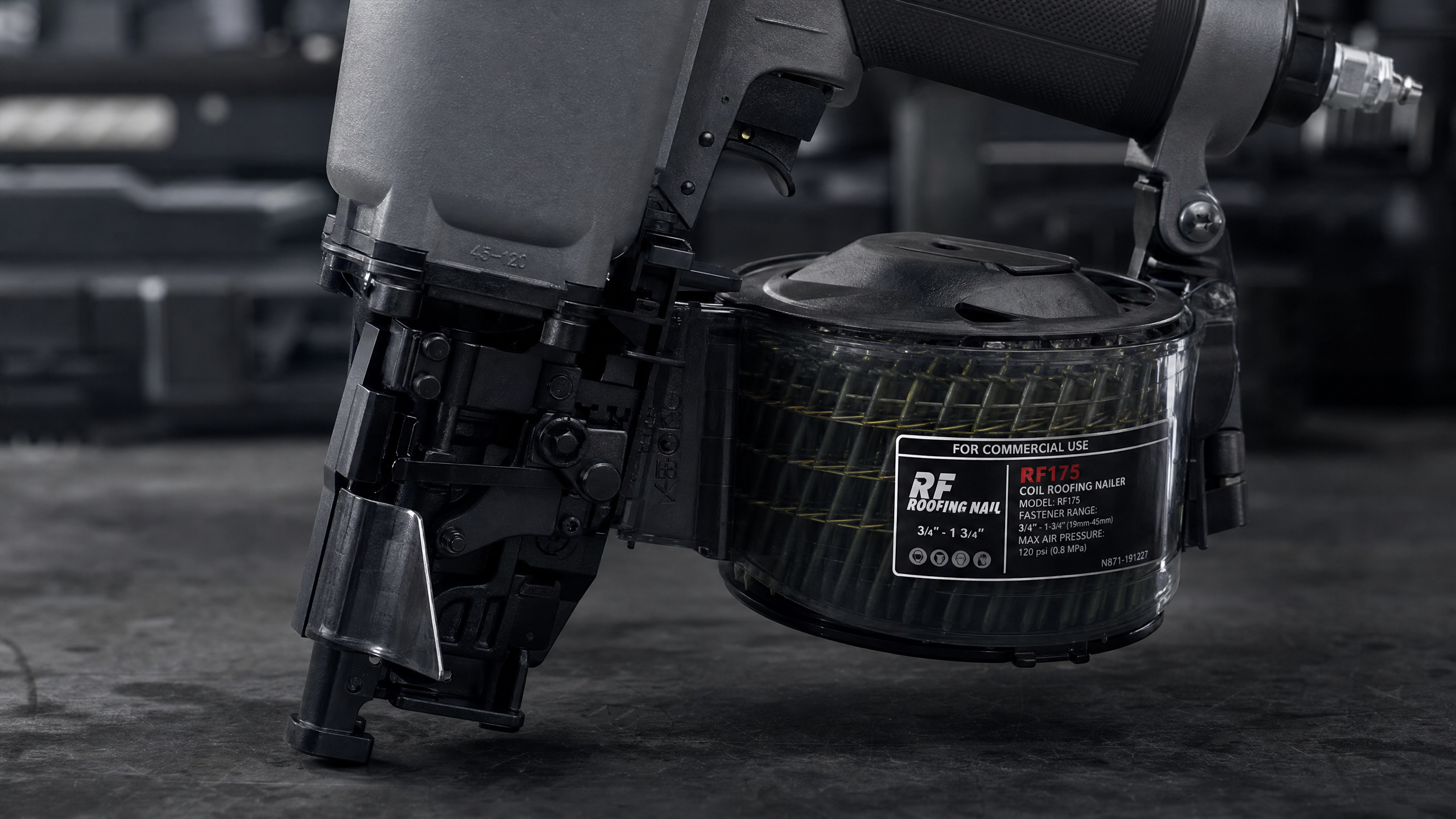
What are the different types of nail guns?
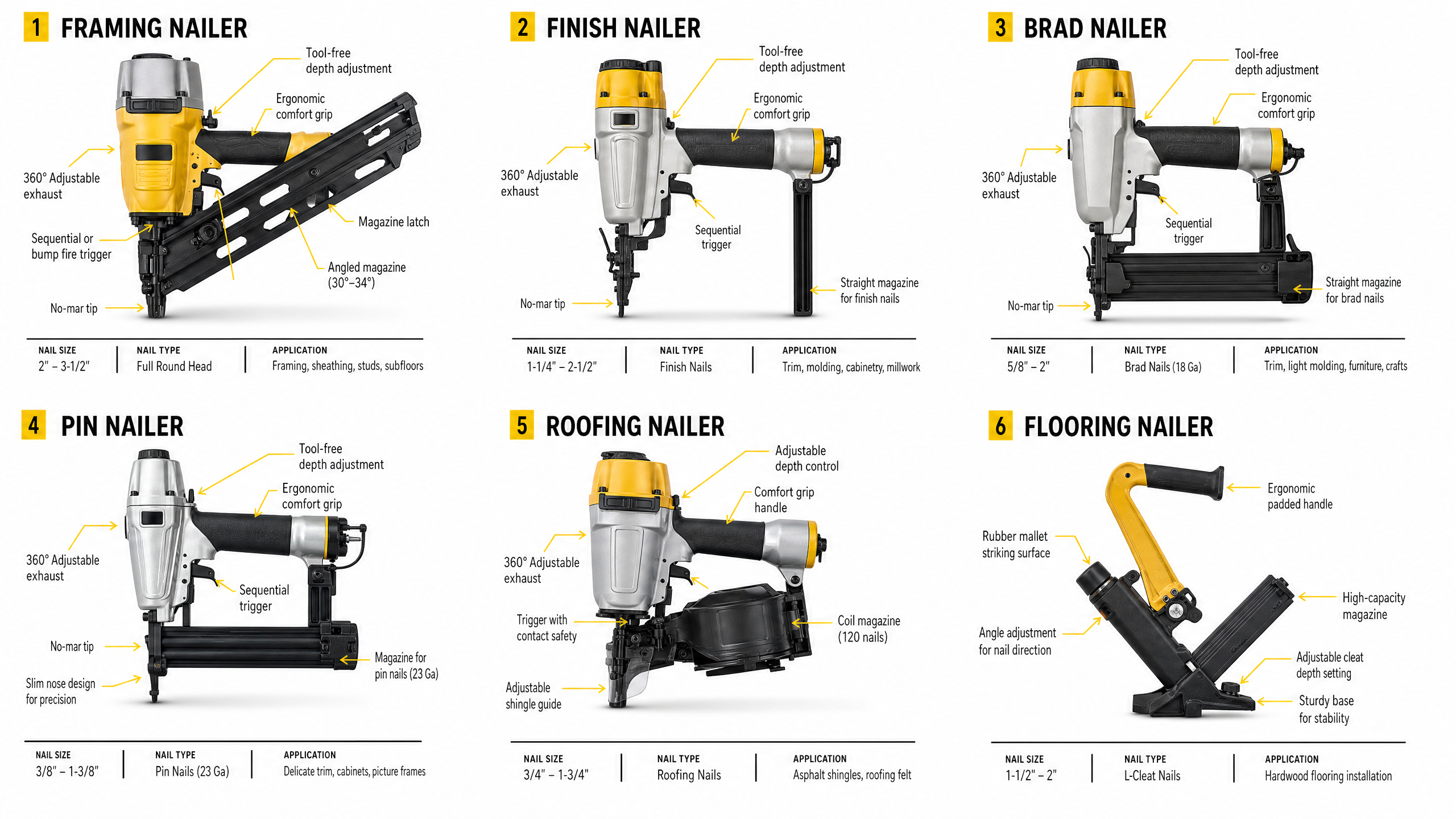
To illustrate the range of nail guns available, and to help explain “What is a nailer?” we summarise nailers listed on our site:
- Brad nail guns – these drive thinner nails smoothly to fasten delicate materials without surface splits
- Coil nailers – use these drum-loaded battery-powered tools when you need continuous site production
- Combi nailers – these dual-purpose units drive both brads and staples for flexible work. N.B. If you only want to fire staples, why not check out our staple gun range?
- Corrugated fasteners – these thick, driven plates join tight mitre joints firmly across flat timber framing
- Flooring nailers – these hit angled cleats securely into hardwood floorboards to ensure completely hidden fixings
- Framing nail guns – a solid choice for securing heavy stud work quickly using aggressive bump mode
- Pin nailers – use these for totally invisible holding power on incredibly fine architectural moulding sections
- Plastic nailers – these drive composite pins, which hold firmly and can be easily sawn along the wood grain
- Roofing nailers – designed to secure standard slates and felt firmly against poor external British weather
- Second fix nailers – these typically feature quick depth adjustment dials to set heads perfectly flush
Having nail guns explained makes selecting the correct nail sizes or the correct nail gauge an important aspect to consider.
Nailer sizes
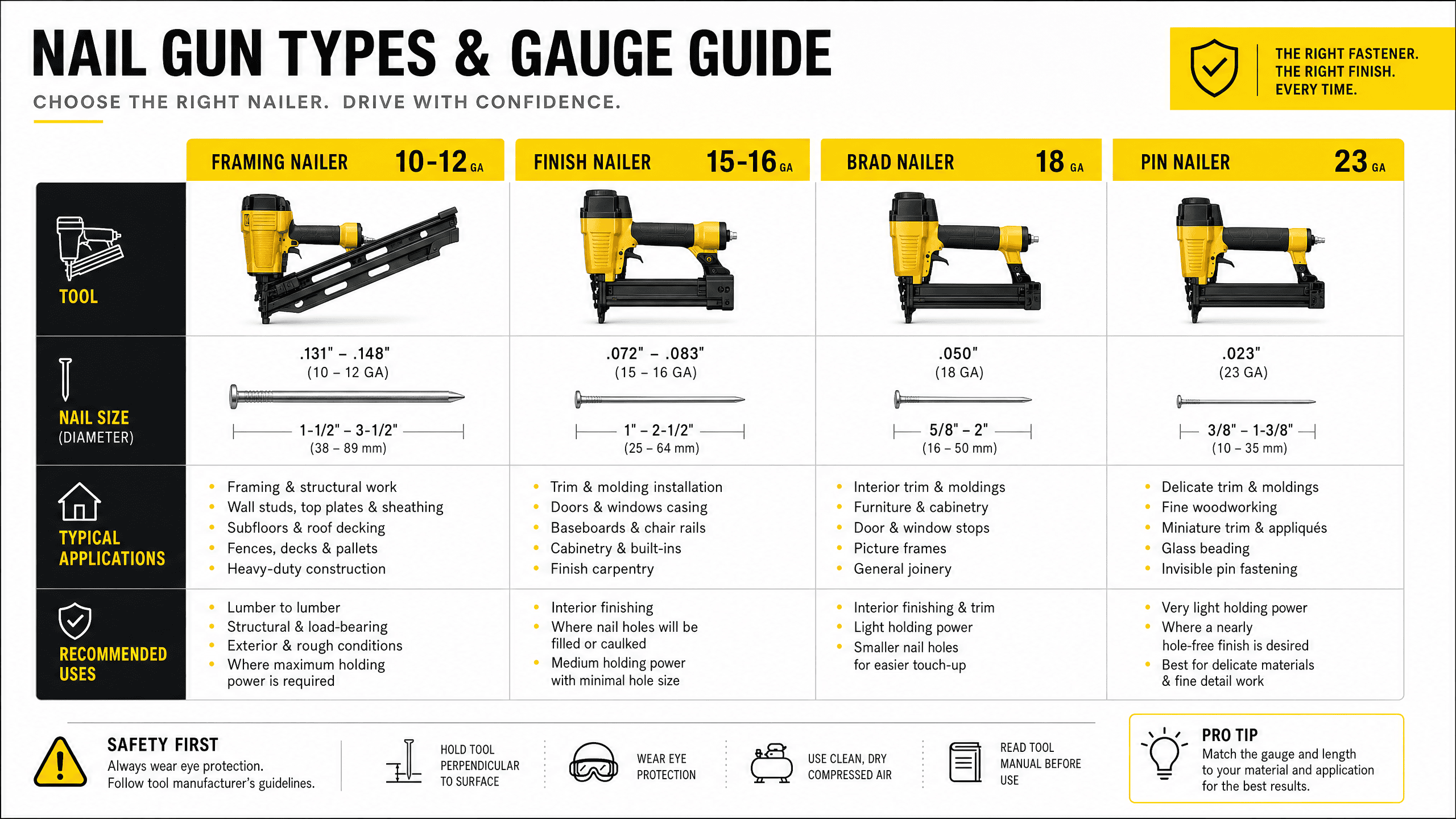
When you choose the right nailer, you can drive with confidence and always ensure you wear PPE! Having nail guns explained makes selecting the correct nail sizes or the correct nail gauge an important aspect to consider. Here are some popular gauges:
- 10-12 gauge – a framing nailer with larger nails suits this gauge. Use this for applications such as framing, wall studs, decking, fencing and heavy-duty construction
- 15-16 gauge – use a finish nailer here. Use this for applications including trim work, casing, cabinetry and finish carpentry
- 18 gauge – the brad nailer size. Has similar uses to a finish nailer, but uses a finer 0.05”, this is perfect for picture frames and door stops
- 23 gauge – the smallest of our nailer sizes, 23 gauge is extremely slim, a pin rather than a nail, typically measuring .023”. This can be used for a variety of micro-tasks such as invisible pin fastening
Which types of nailers suit different project stages?
Match your professional nailer to the correct phase of your building work:
1) First fix nail gun
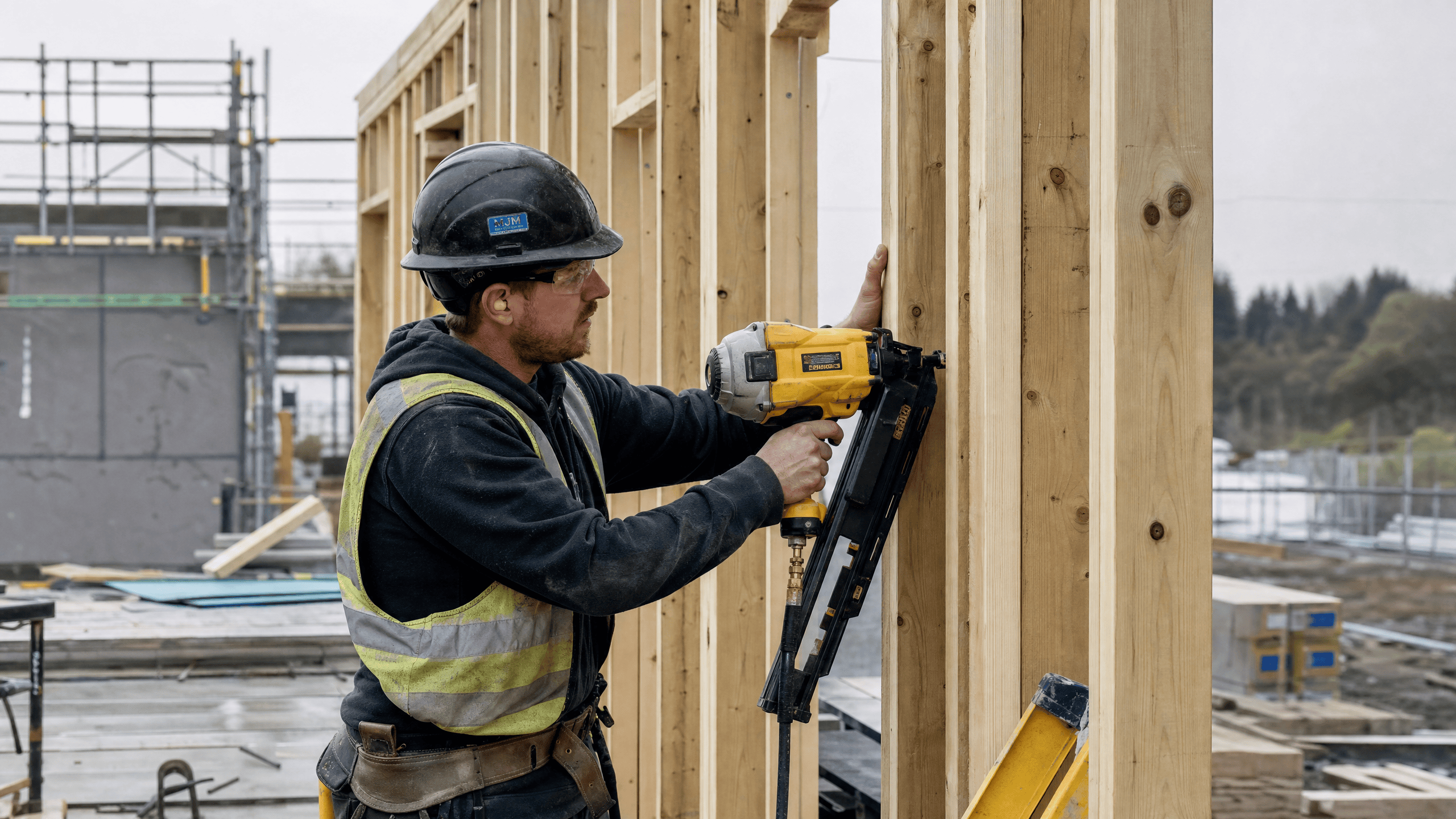
These heavy-duty structural tools handle the initial framing stages of your on-site building work. A robust framing nail gun drives thick, long framing nails with massive power directly into tough materials like dense structural timbers. You will rely on these powerful pneumatic nail guns for assembling roof trusses, stud walls, and floor joists.
First fix structural applications typically require heavy-duty framing nail guns, strip nailers, and robust metal connector nailers on site. They use an air-powered compressor system or a portable gas canister setup to fire nails rapidly. This phase requires structural strength rather than a neat surface finish, making these tools your best bet for heavy-duty projects.
2) Second fix nailer
These precision tools take over the job once your plastering dries out completely on internal construction jobs. Often called a finishing nail gun, these units drive thicker 15 or 16-gauge fasteners cleanly. They are specifically designed for installing architectural timber trims, internal door frames, window casings, and heavy wooden skirting boards.
Second fix finish installations typically require 15G angled finish nailers and 16G straight or angled finish nail guns on site. They feature protective non-marring rubber nose pads to ensure you never dent your neat timber faces. Choosing a flexible cordless model lets you work freely across changing rooms without dragging a heavy air hose around.
3) Fine finish nailer
This category covers small brad nail guns and ultra-fine pin nail guns used for intricate internal timber tasks. These tools drive thin brad nails or headless pin nails to secure delicate mouldings without splitting the timber grain. They are the ideal choice for detailed furniture making, picture framing, and installing slender decorative trim beads. Using a compact brad gun or a best pin nailer allows you to access awkward, tight spaces where larger units simply cannot fit. They provide just enough temporary holding power to keep lightweight timber items secure until your wood glue dries.
Frequently asked questions
Read our FAQs about the different types of nail guns below:
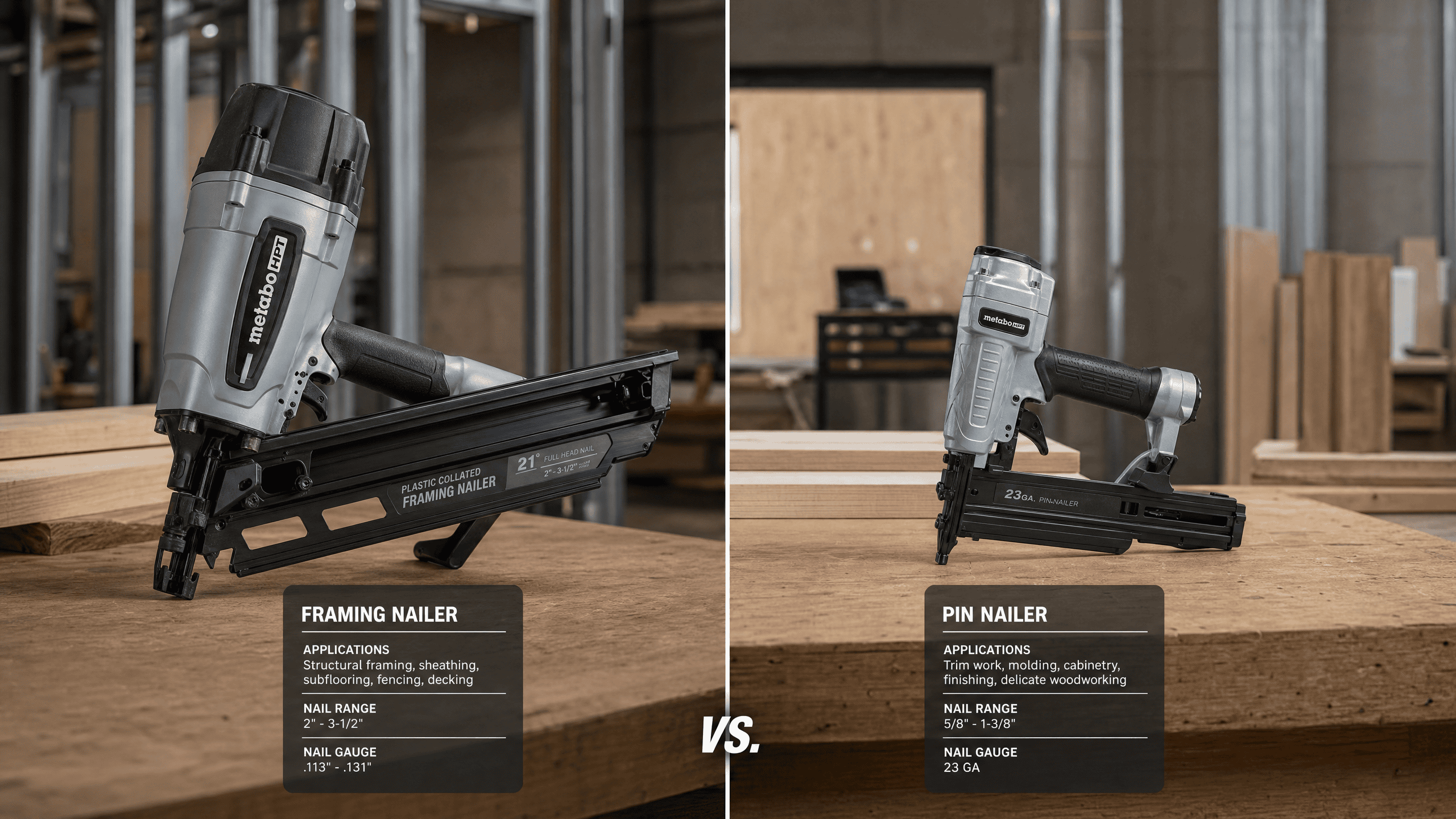
1) What are the main differences between a framing nailer and a pin nailer?
These two types of nailers sit at opposite ends of the trade scale. Heavy framing variants are built for driving nails directly into thick structural timber beams. A fine pin nailer tool handles delicate decorative mouldings during high-end woodworking projects and possibly with other thinner materials. Both options are essential tools for modern construction sites.
2) Should I choose a pneumatic nailer or a cordless model?
Your choice boils down to site mobility versus continuous firing power. Pneumatic nailers are absolute workhorses for long shifts, giving you relentless driving force without fading. The trade-off is dragging an air hose around the deck.
If you are jumping between rooms installing internal door frames, a small battery or gas cordless model is your best bet. You lose the bulk of a heavy air compressor line, though you will carry extra weight in the tool chassis itself.
3) What maintenance do nail guns typically require?
There are many nailers to choose from. Your choice of power source alters your weekly preventative servicing routine:
- Manual nail guns – standard manual units need almost zero care on-site
- Electric models – electronic variations and electric nail guns require moisture-free storage to protect delicate circuitry
- Pneumatic nailers – need three drops of tool oil daily to lubricate internal piston valves
Regularly checking the nose helps prevent a jammed nail when driving nails through various materials. These simple steps ensure your nail gun lasts for long periods on commercial jobs.
Conclusion
Throughout the article, we explored various types of nail guns. Their purpose is to drive collated nails safely into timber whilst keeping building work efficient, secure, and free of surface damage. There are various types of specialist nailers, ranging from framing and coil nailers down to fine pin and brad nailers. Choosing the correct gauge is vital, nailer sizes fire anywhere from heavy 10-12 gauge framing nails to ultra-slim 23 gauge pins.
In defining “What is a nailer?” we explored first fix applications (e.g. heavy framing tasks like roof trusses, stud walls, and floor joists) versus second fix applications (like architectural trims, door frames, and skirting boards). It is also important to consider the power source with pneumatic, cordless and electric are all popular options. Read our FAQs section to learn more on this topic.
Contact us
Learn more about the different types of nail guns when you contact our team, where you can get nail guns explained thoroughly. We can advise about the types of nailers we sell, all at the best value for the trade.
Our contact details are:
- By phone – call us at 0121 552 8400
- By email – these can be sent to sales@betcofasteners.com
- Contact form – our contact us page allows you to complete this online